Public Memory
A searchable record of what public figures say over time, with every claim tied to dated, sourced quotes and a review status.
- Date
- July 2026
- Built with
- Next.js, TypeScript, Tailwind CSS, Playwright, Vitest
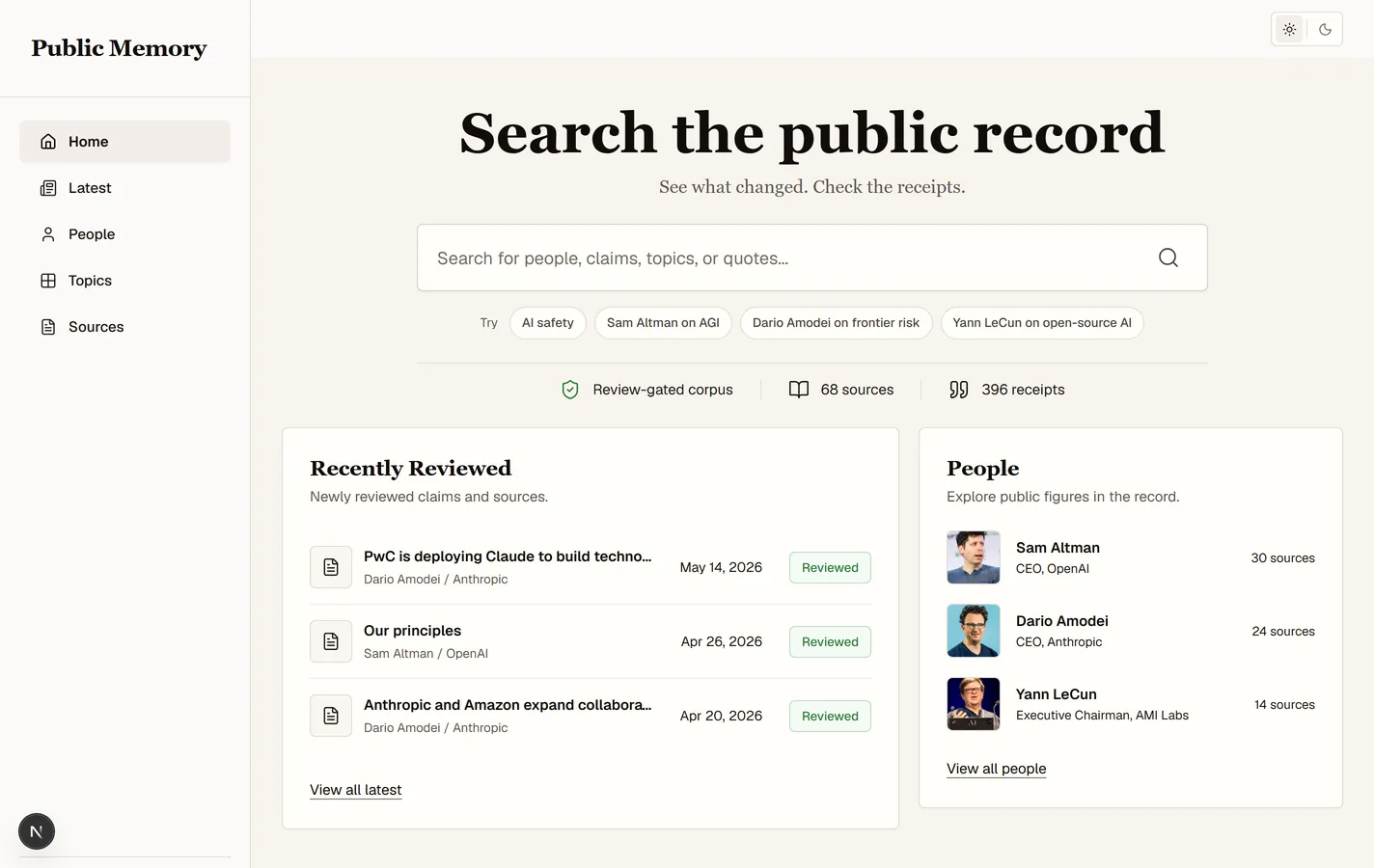
Public Memory keeps track of what public figures say, and ties every entry to a source. It draws on interviews, speeches, podcasts, essays, posts, and testimony, and records what influential people say again and again, how their positions change, and where a later statement seems to conflict with an earlier one.
Everything in it is already public. It just isn't collected anywhere you can check it. Public Memory doesn't claim to know what anyone really believes. It shows the patterns in what people say in public, and each pattern comes with the quotes behind it: when and where each one was said, a confidence label, and any caveats.
One position, followed over years
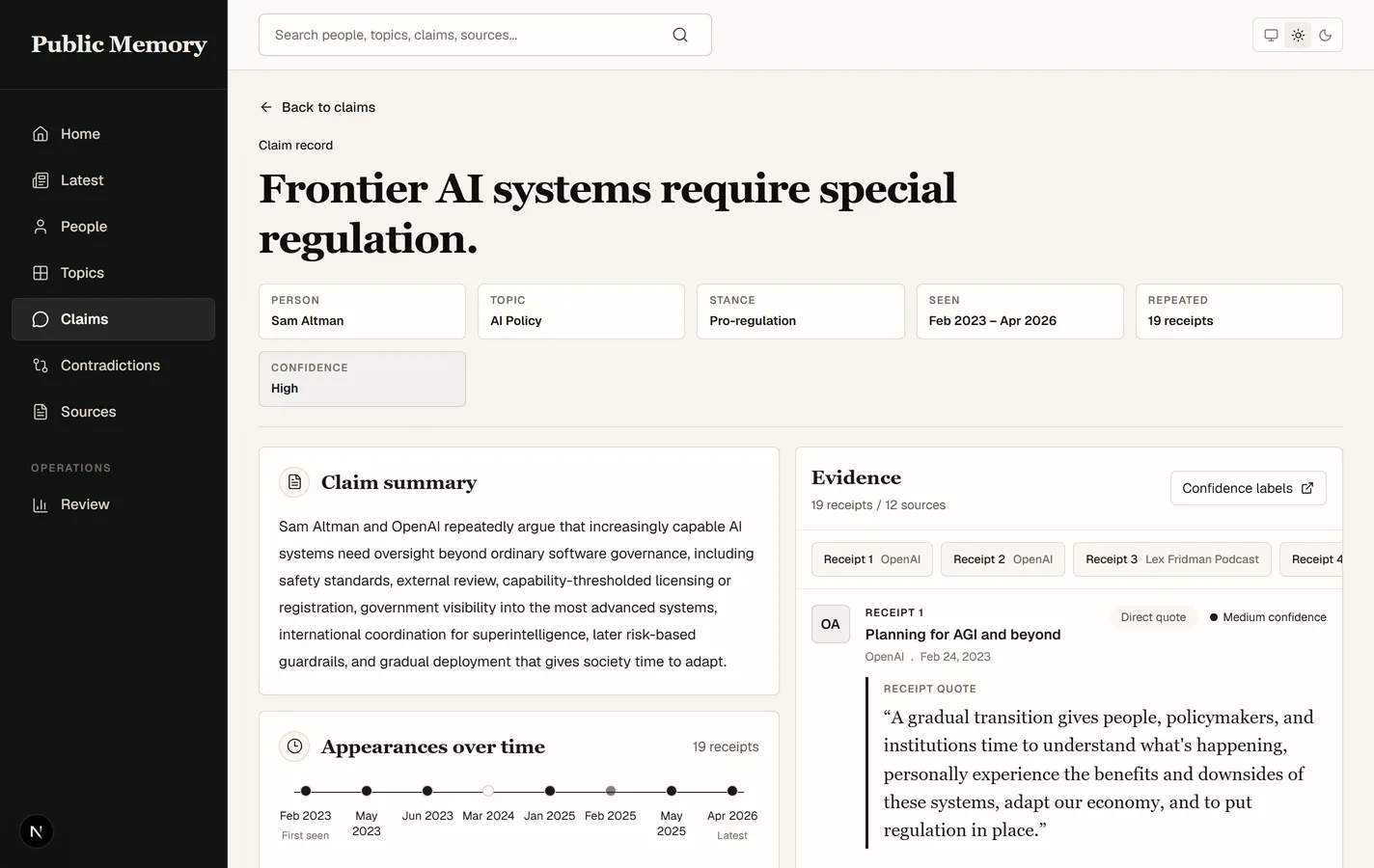
Everything is organized around claim records. A claim record is one position a person keeps coming back to, followed across years of appearances. At the top are a short summary, the person's stance, and a confidence rating. Below that is a timeline of every appearance, and next to it the receipts. A receipt is a direct quote labeled with its source, its date, and a confidence level.
A page for each person
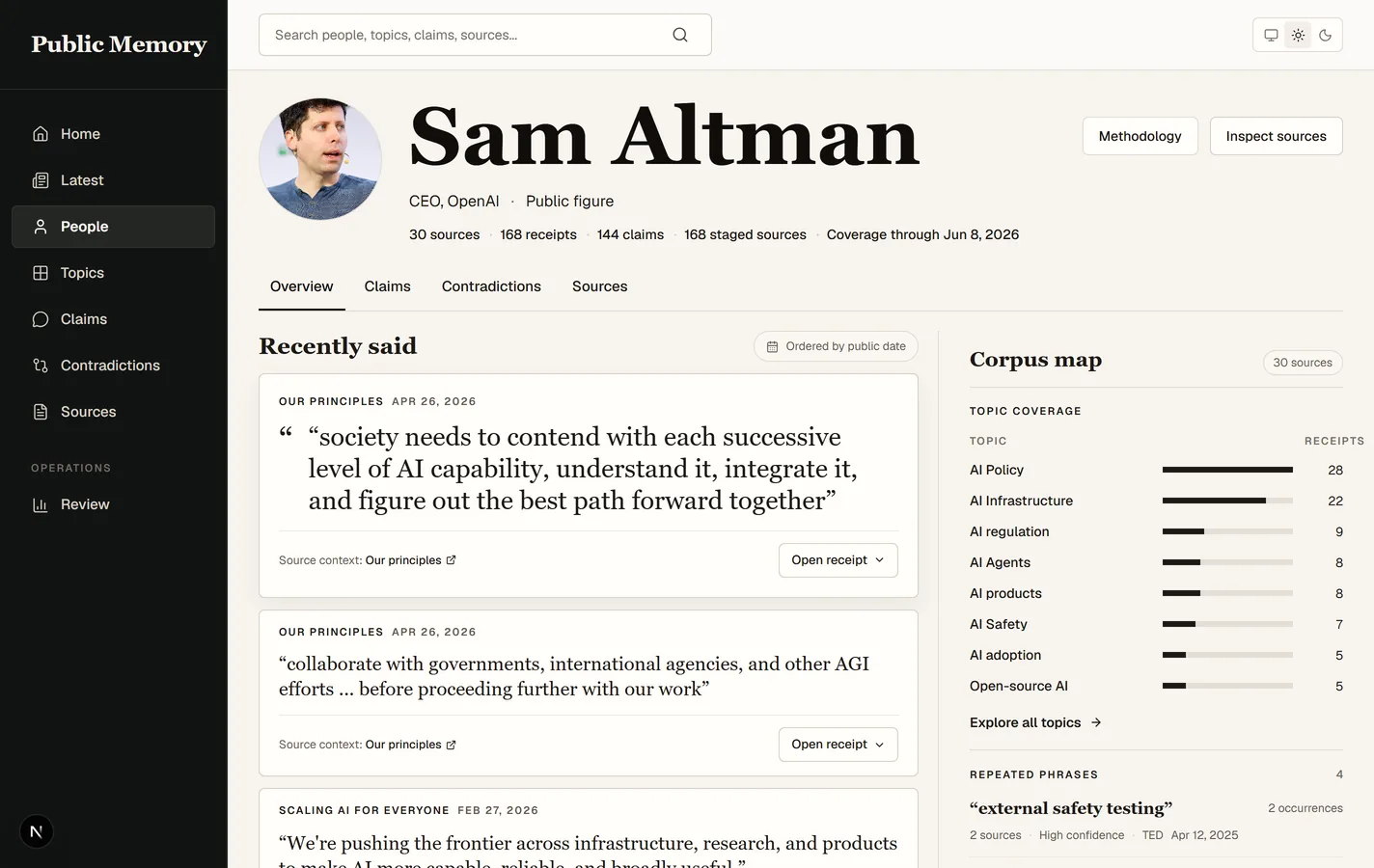
Each person gets a page built only from reviewed sources. It shows their most recent statements, which topics the record covers and how much, the phrases they repeat, and tabs for their claims, contradictions, and sources. The first version covers AI and tech leaders, including Sam Altman, Dario Amodei, and Yann LeCun. Material on a wider group has been collected and is waiting on review.
Why contradictions wait for review
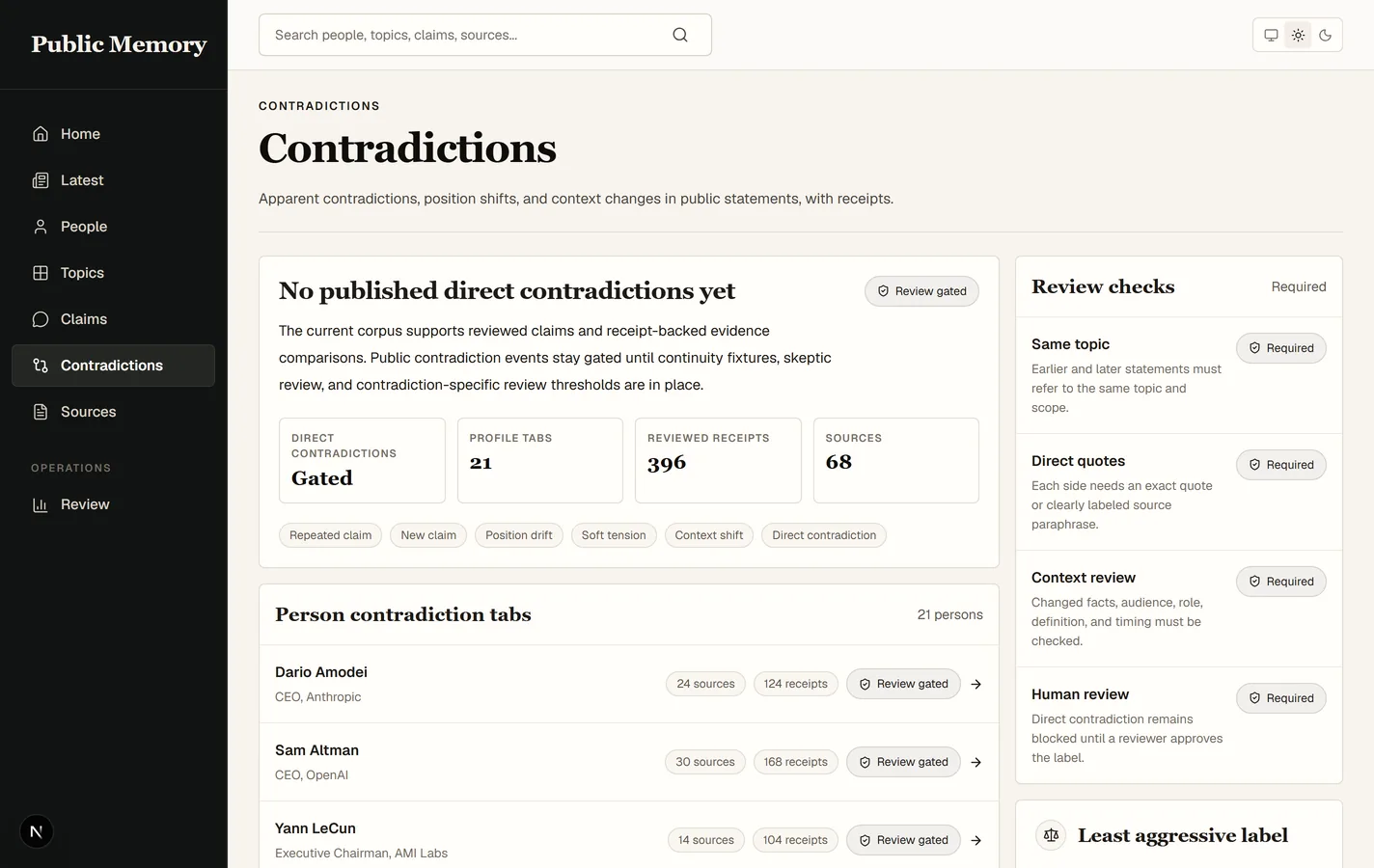
Contradictions may be the obvious draw, but I care more about what people say consistently than about catching them out. Nothing is published as a direct contradiction until both statements are confirmed to be on the same topic, both quotes are checked word for word, the context has been reviewed, and a person has signed off. Until something passes, the contradictions page shows only the checks.
How sources get checked
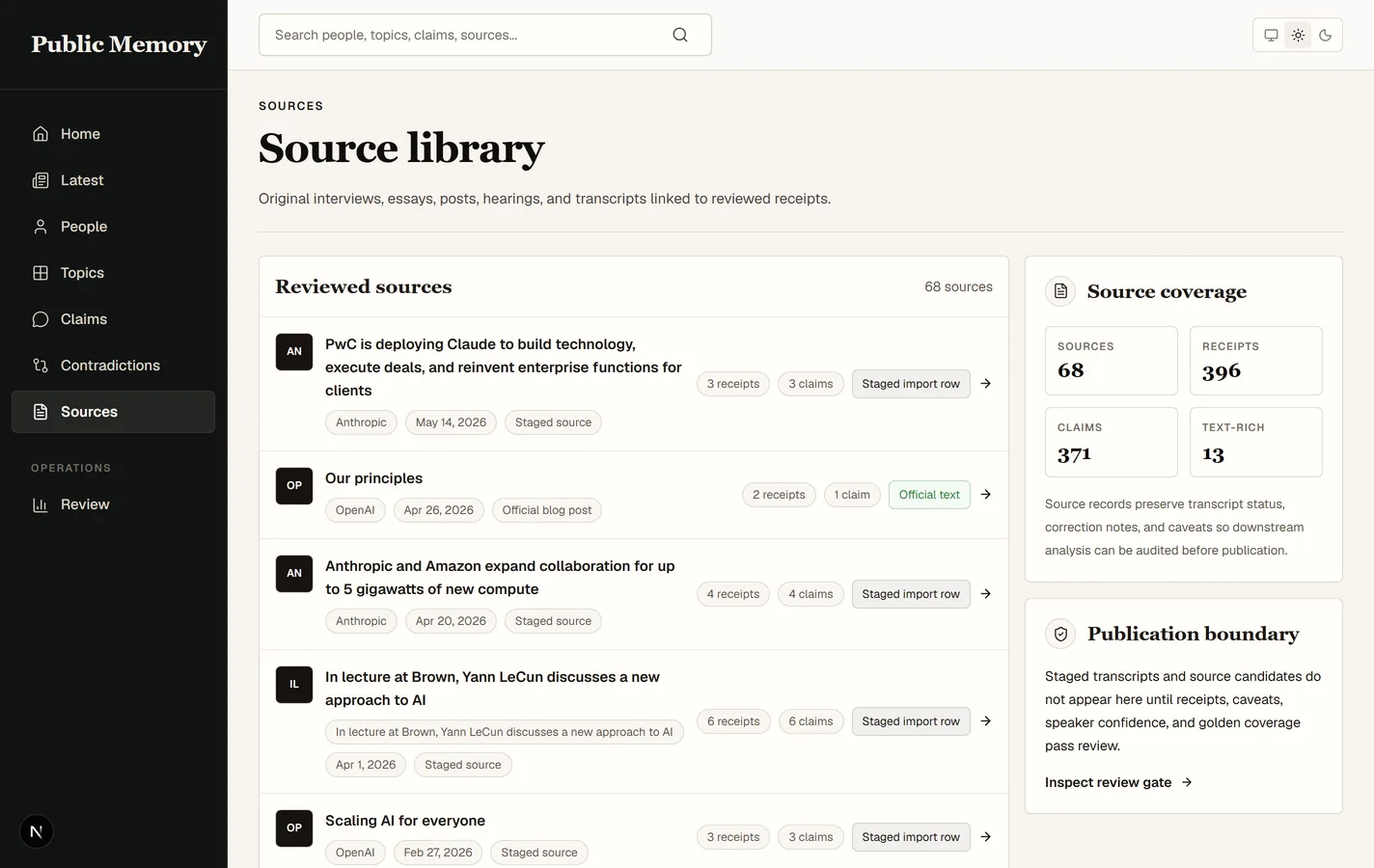
AI agents do the research behind the site. They bring in sources, prepare transcripts, confirm who is speaking, pull out claims, and put those claims through a skeptic review. A separate, guarded step moves material into the published record, and research that hasn't been through it never counts as part of the record. Before anything reaches the site, it goes through validation checks, rules that set aside anything doubtful, and a comparison against a hand-labeled test set. The reviewed record holds 68 sources and roughly 400 receipts so far, with hundreds more transcripts waiting behind it.
Why I built it
I built Public Memory because I want AI-assisted research to work like an archive, not add to the stream of takes. I kept the design plain and dense.