Line Tower Wars Rebuild
A favorite Warcraft III tower-defense map, rebuilt from a Three.js browser prototype into an early Unreal Engine 5.8 version.
- Date
- May 2025
- Built with
- Unreal Engine 5.8, Unreal Engine MCP, C++, Claude Fable 5, Codex, Claude Code, Meshy, Blender
One of my favorite long-running projects is rebuilding Line Tower Wars, a custom tower-defense map for Warcraft III. I've also used it to test AI coding tools since GPT-4 in 2023. Back then I copied and pasted snippets into my editor, and each new model got the project a little further before it hit a wall.
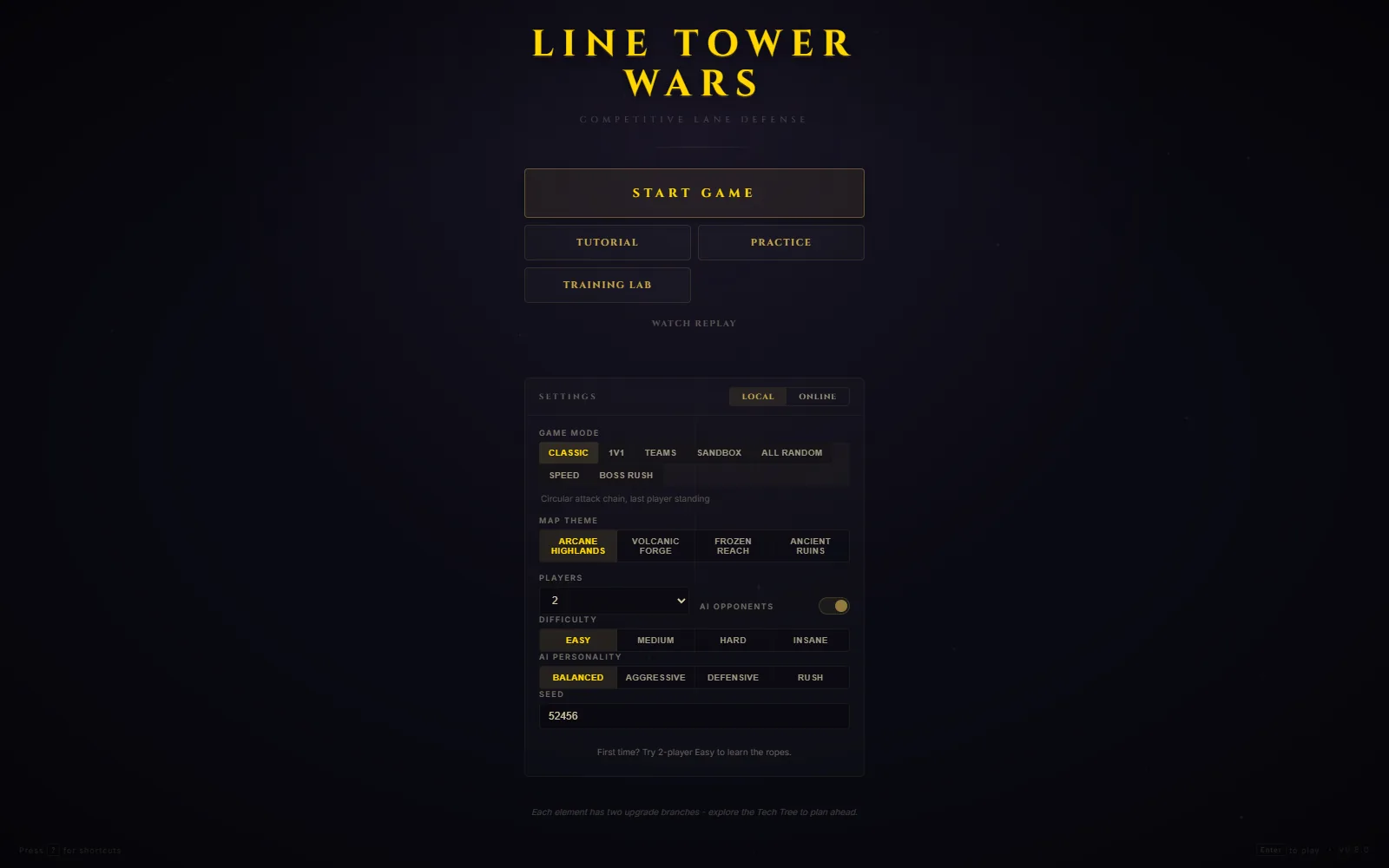
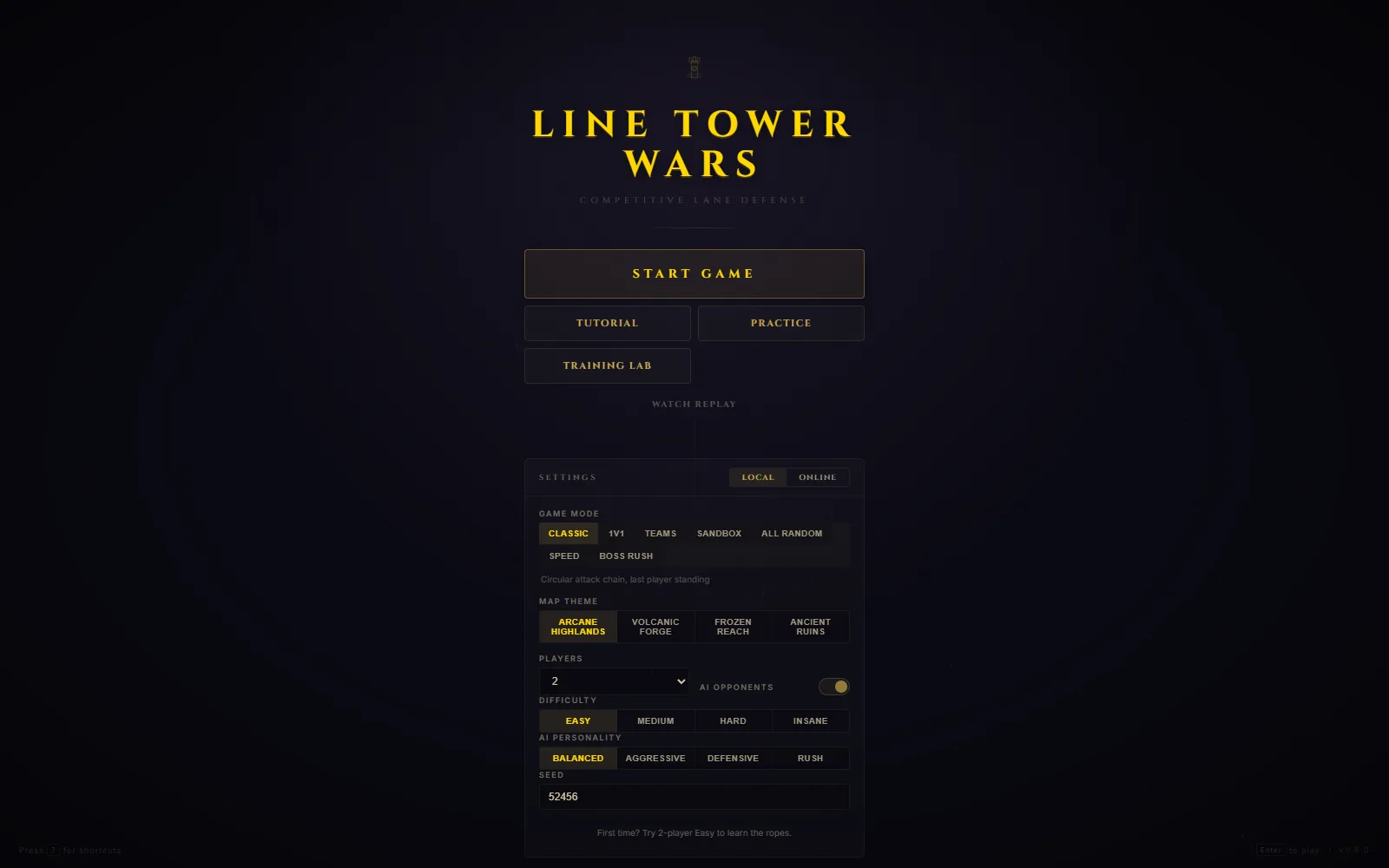
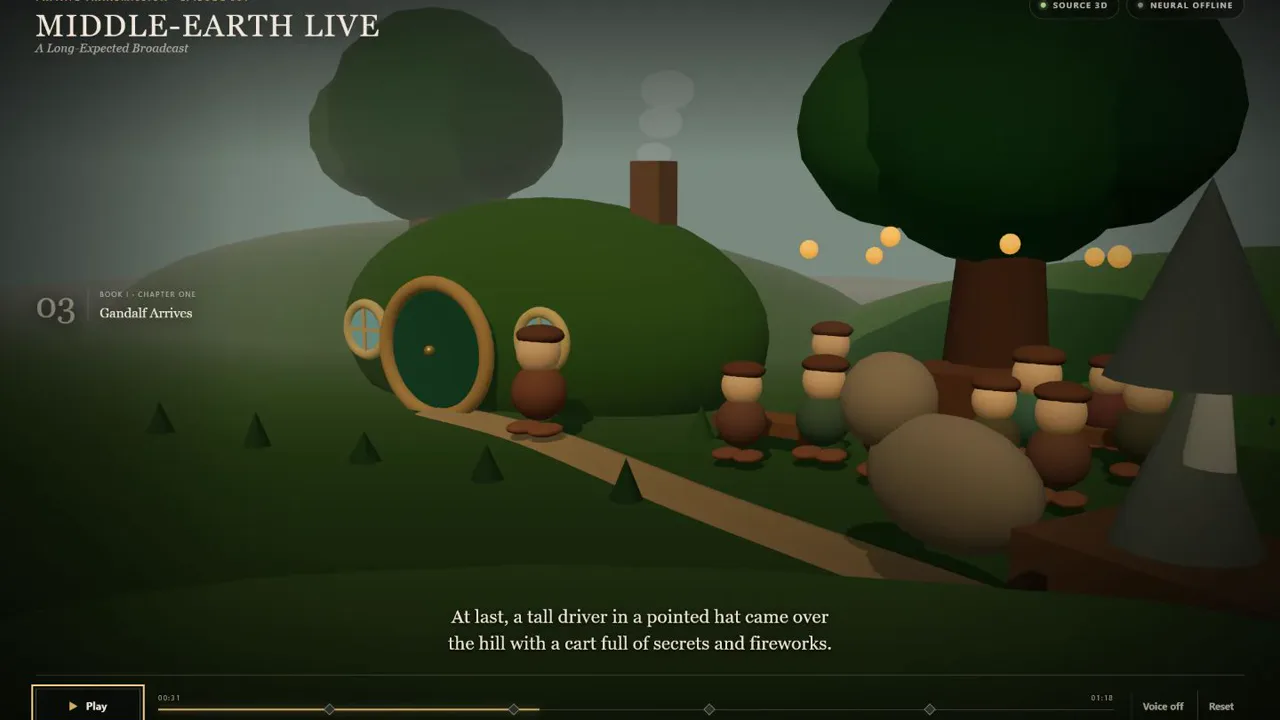
The first playable version ran in the browser, built with Three.js. It let me get the basics working quickly: lanes and waves, towers on a build grid, units you send at your opponent, research, the interface, and the general feel of the original.
In July 2026 I brought Claude Fable 5 back into the work and connected it to Unreal through the UE 5.8 MCP, which gives agents direct access to the editor. Before, the agents could only hand me code changes. Now they work in the editor with me: they look at the level, adjust the C++ code and the UMG interface, run headless commands, import models from Meshy and Blender, compile the project, and check their own work with captures from the engine.
Claude and Codex work on the same tasks; I don't give each one its own part of the project. The game simulation (/sim) is kept separate from the Unreal side (/game), which handles the graphics and the player's input. The simulation always gives the same result for the same inputs, and it still decides how the game plays. The Three.js build is still a useful reference for gameplay, but the current version of the game is in Unreal.
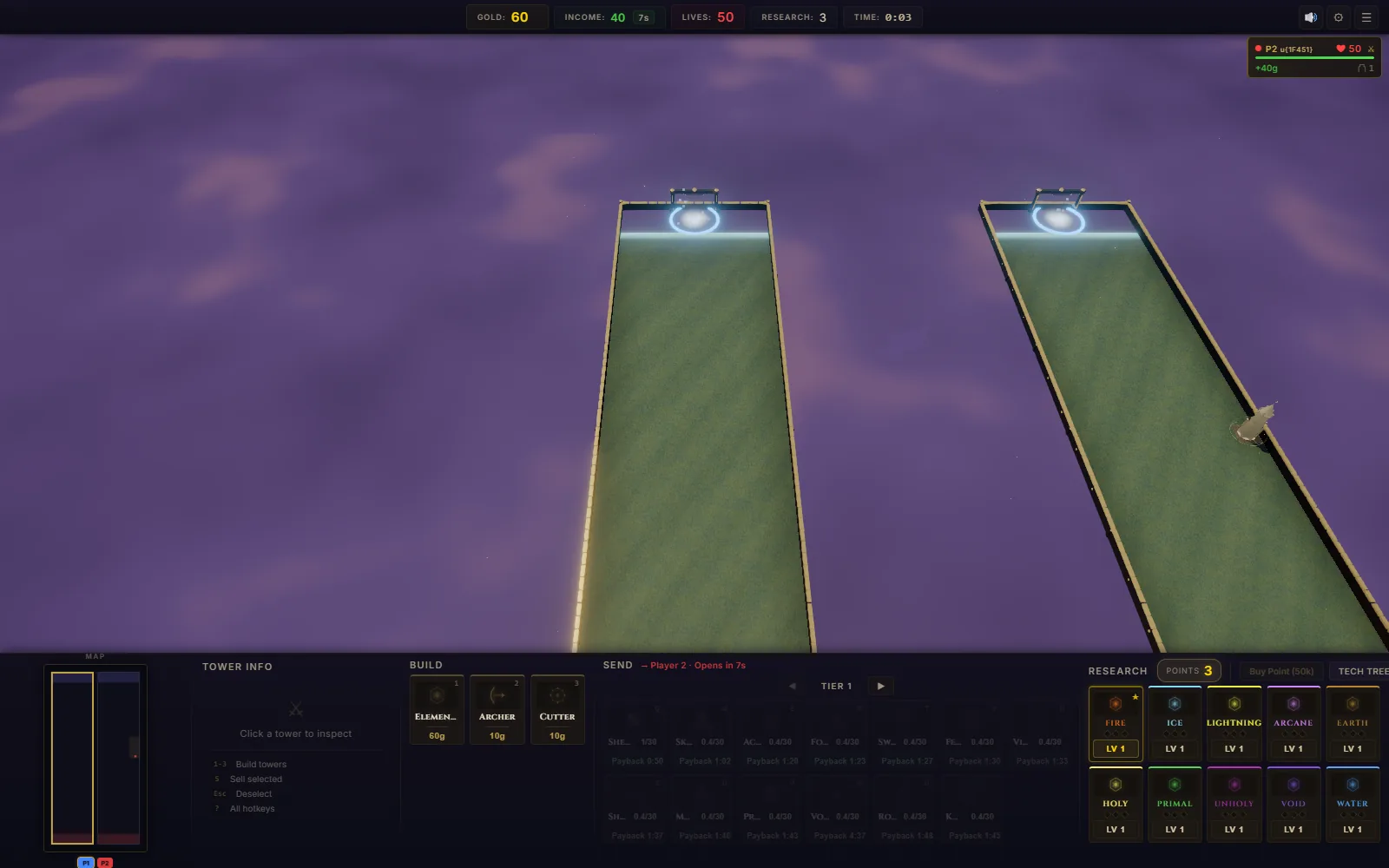
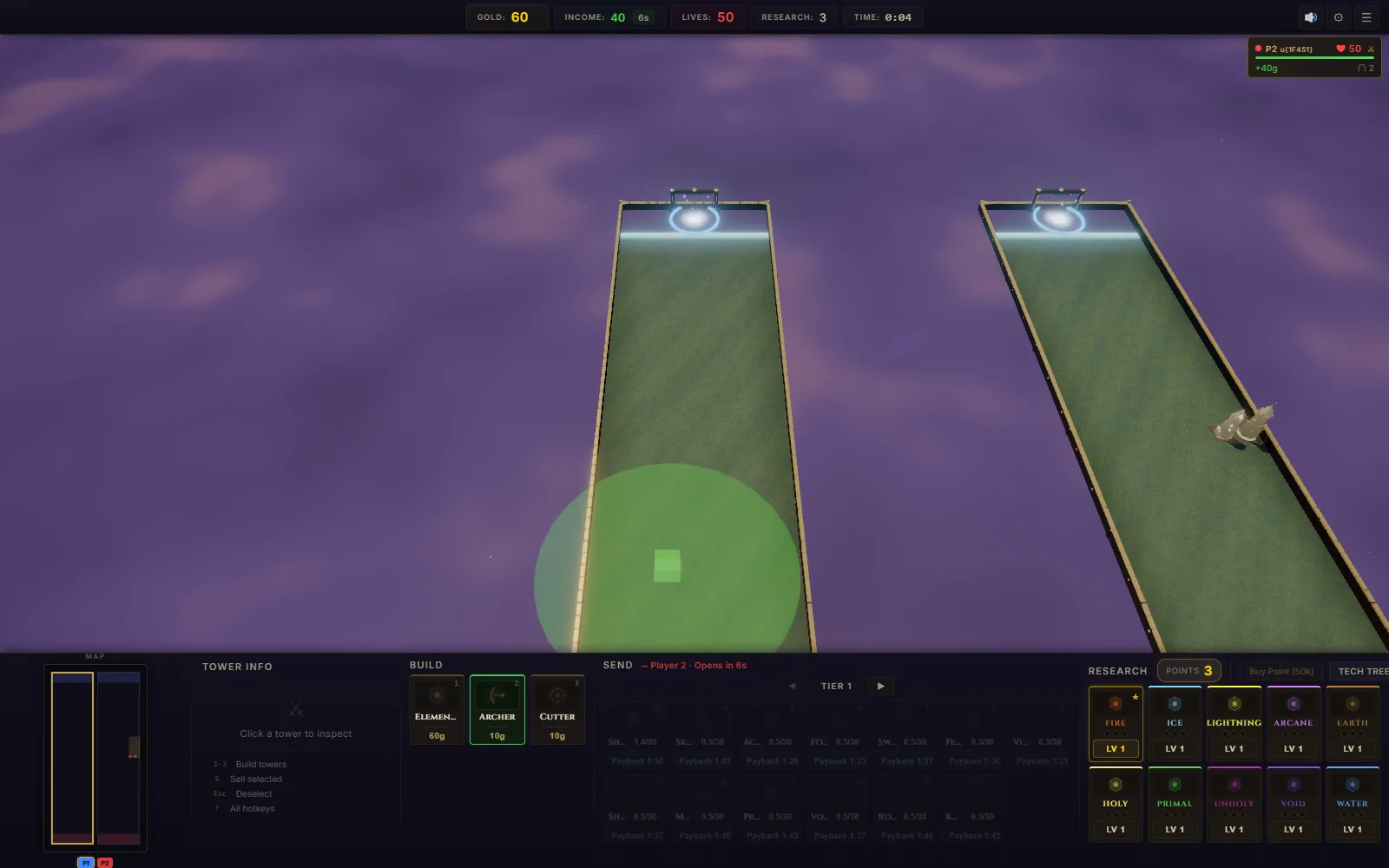
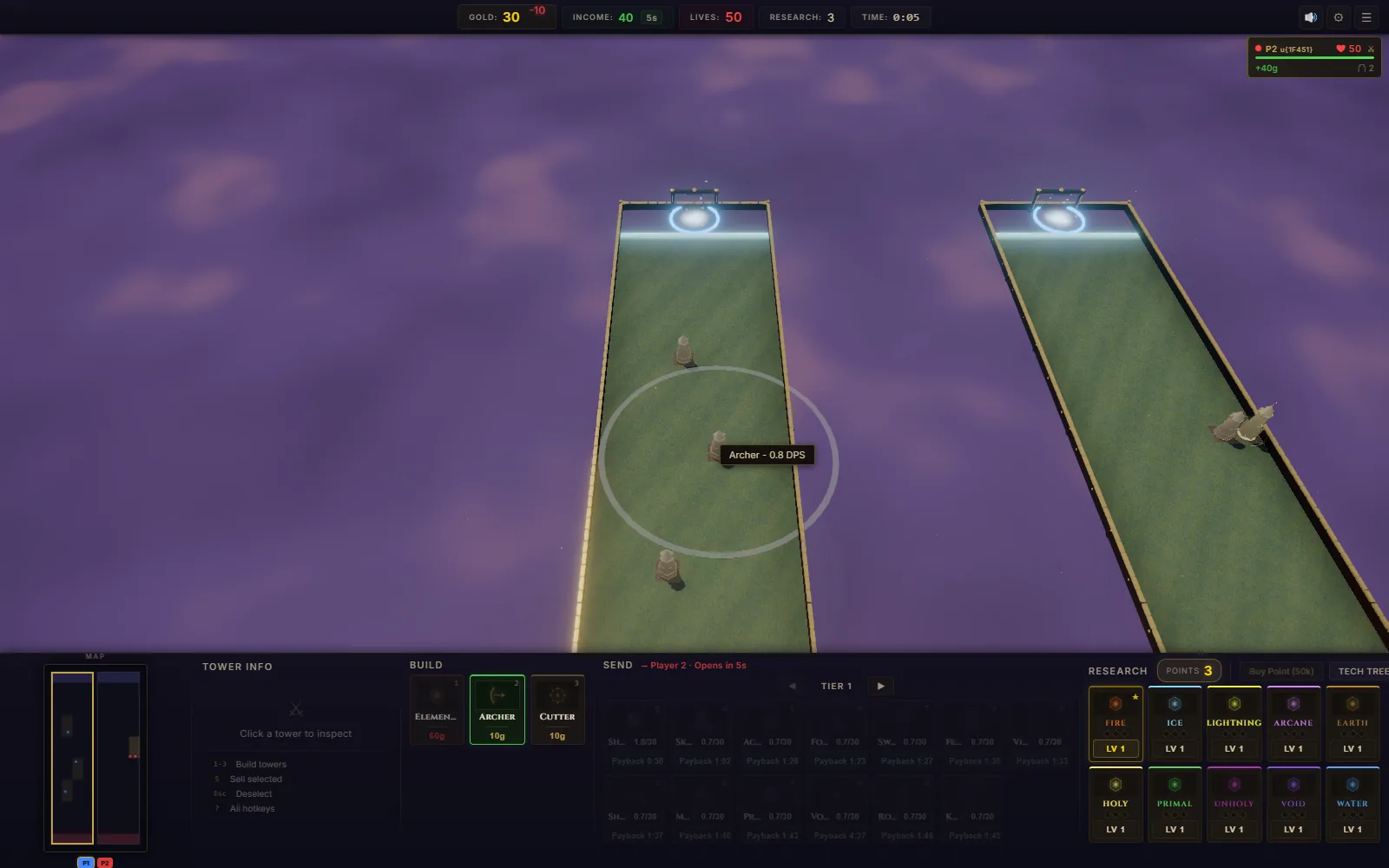
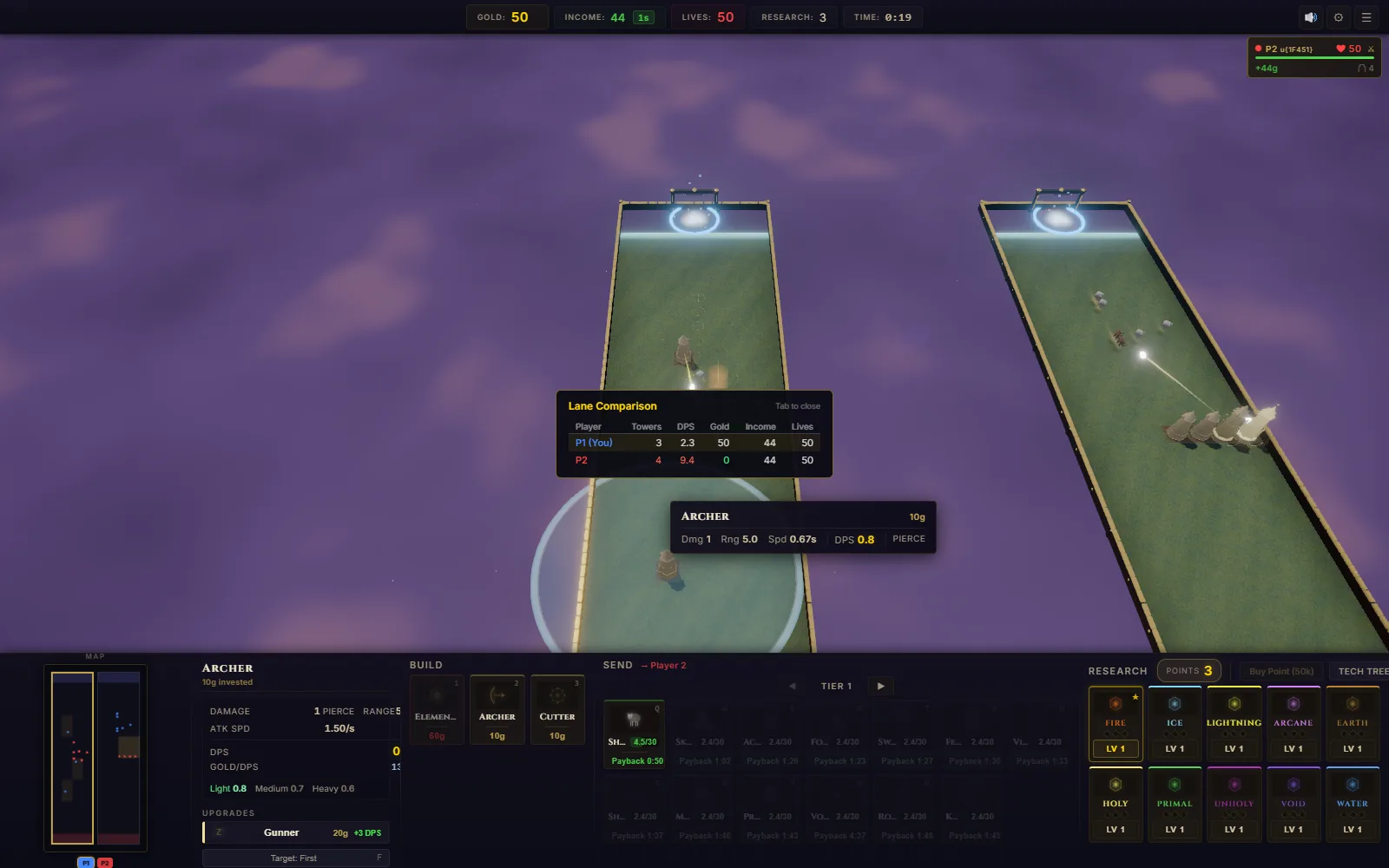
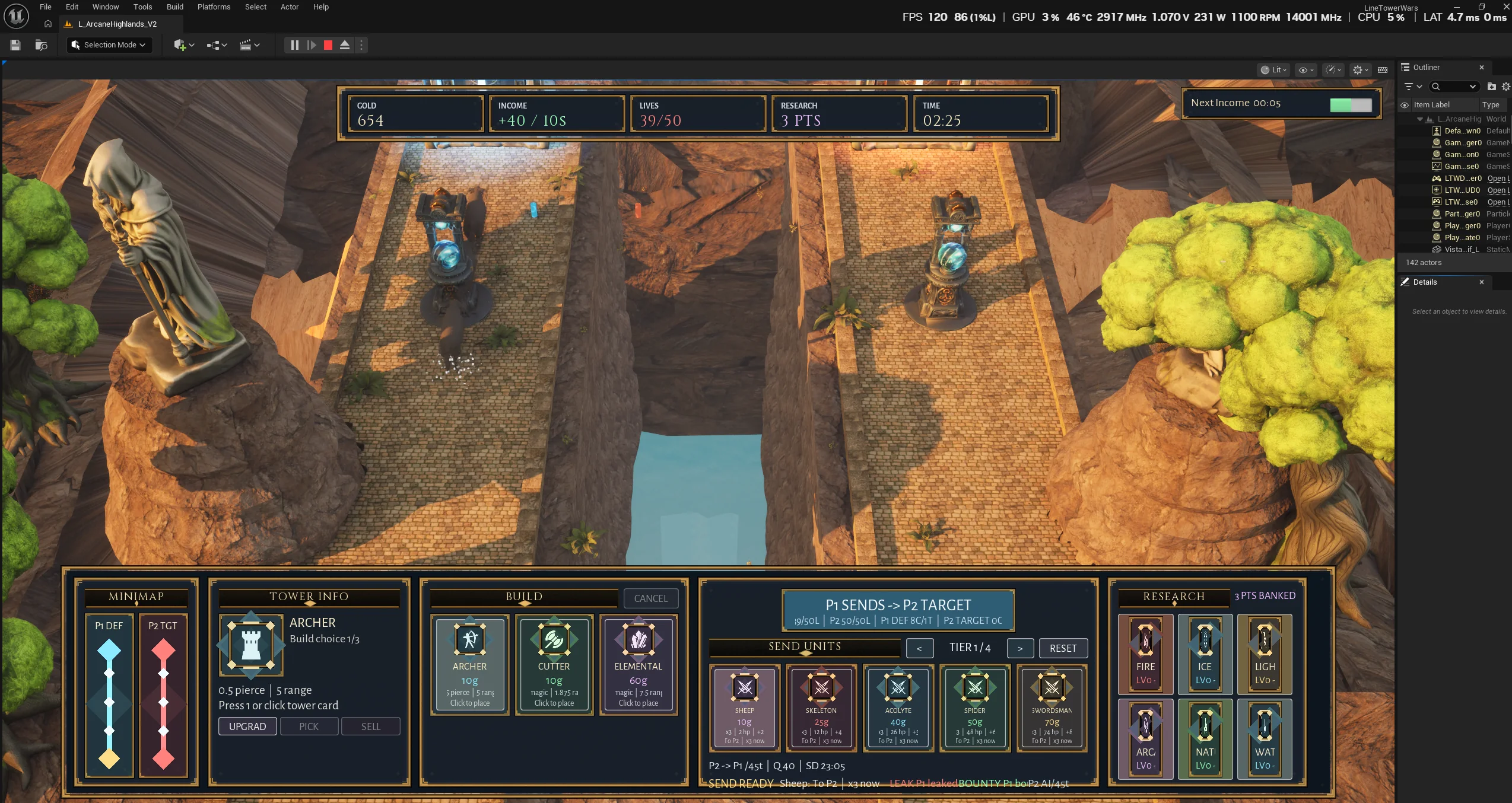
The art isn't final. What exists now is a playtest version built natively in Unreal: a two-lane battlefield that is easy to read, an ornate strategy-game interface framing it, panels for building and inspecting towers, controls for sending units, and research. All of it is captured from the engine itself. It has stopped feeling like a browser prototype and started feeling like a game in production.