Council
An app that puts a disputed question to several AI models and publishes the answer as a sourced public record that anyone can challenge.
- Date
- June 2026
- Built with
- Next.js, React, TypeScript, SQLite, OpenRouter
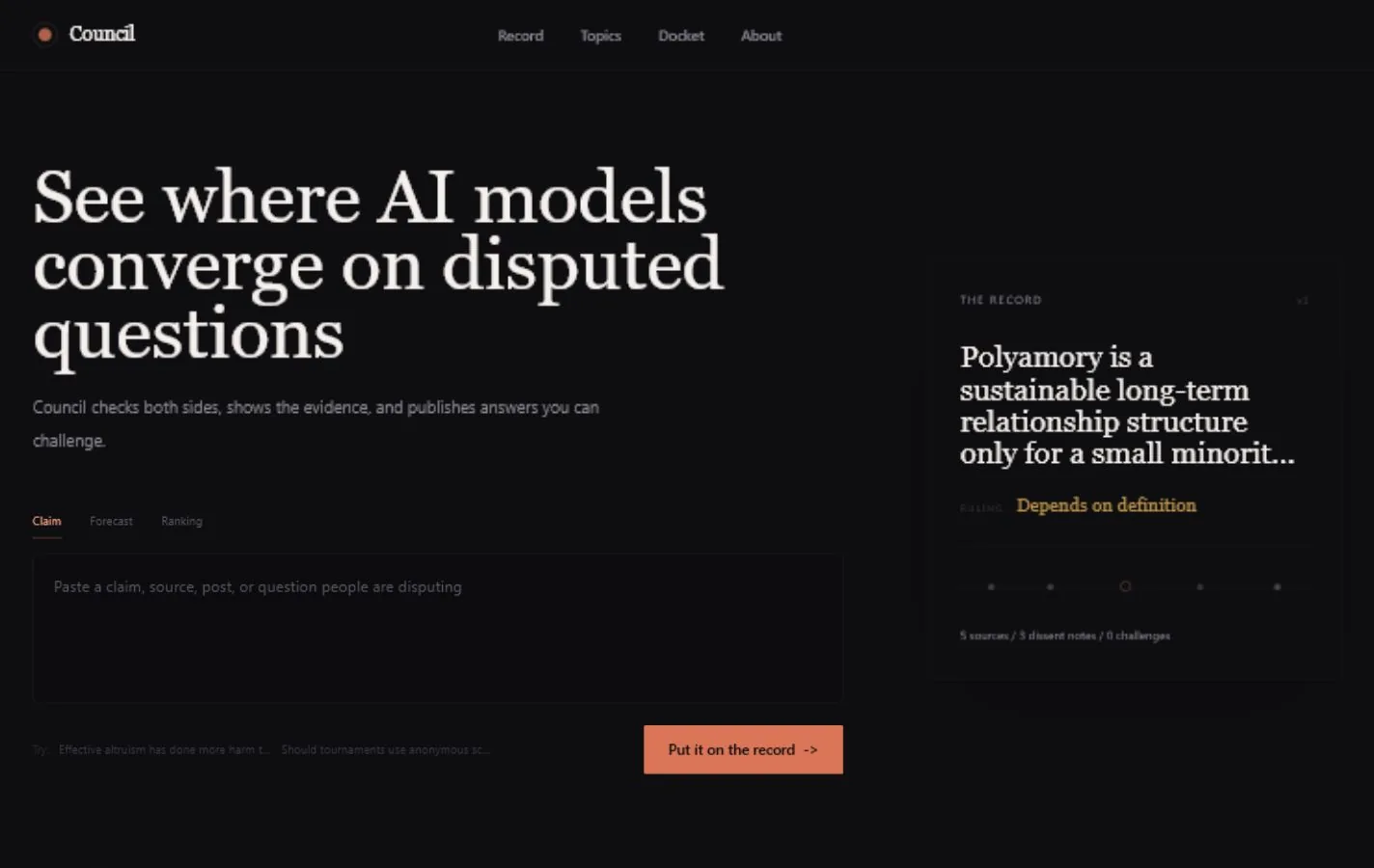
You give Council a disputed question, such as a claim, a forecast, or a ranking. It puts the question to several AI models and publishes the result as a record: the answer at the top, then the evidence, how the models voted, and where they disagreed. Anyone can challenge a record, and it gets a new version when better evidence comes in.
What you get back
You can type a question or paste in a link, a post, or an argument. Depending on what you ask, Council returns a verdict on a claim, a forecast, a comparison, or a ranking. If the question is too vague, it comes back with a clarification. Every finished run becomes a public record.
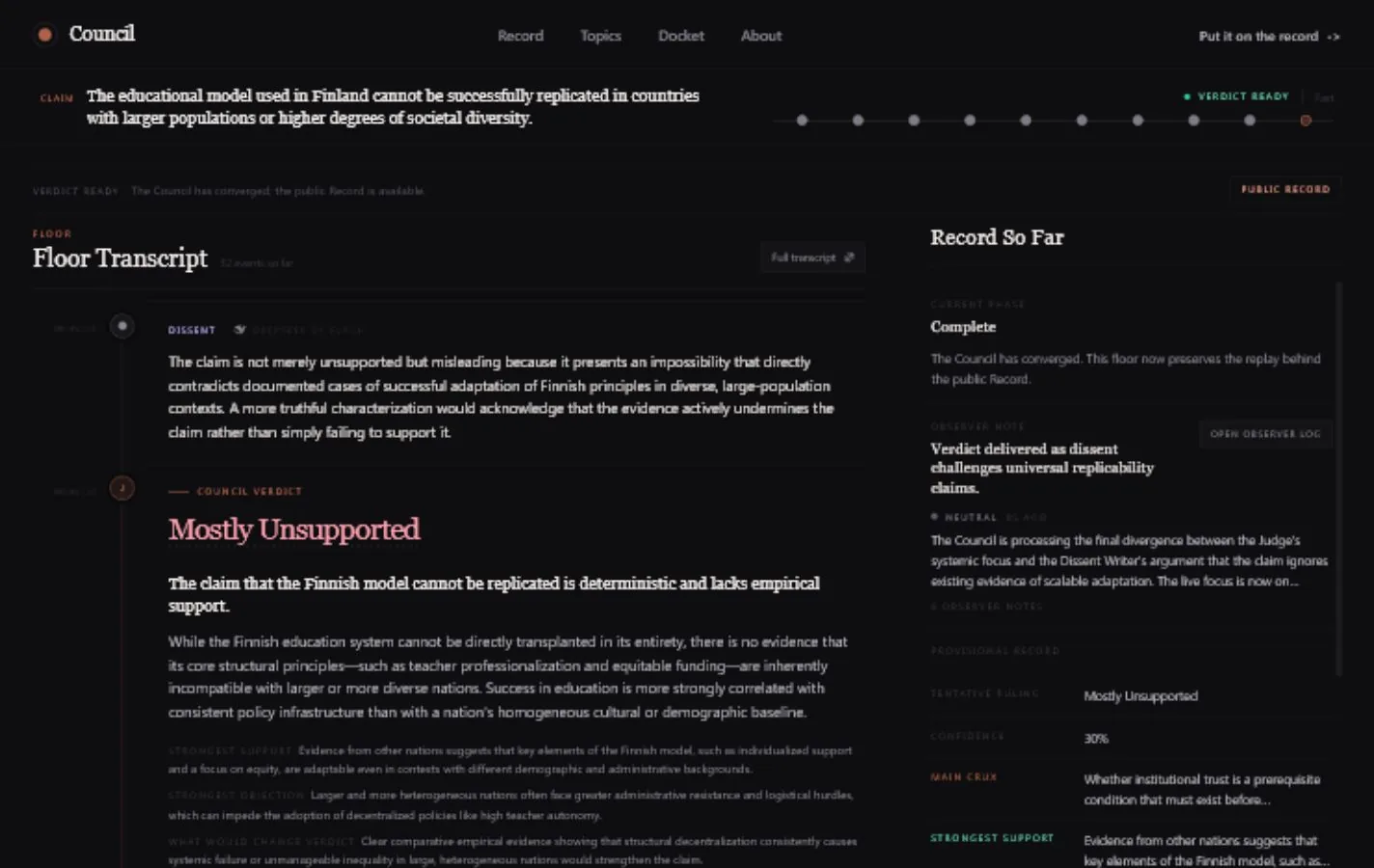
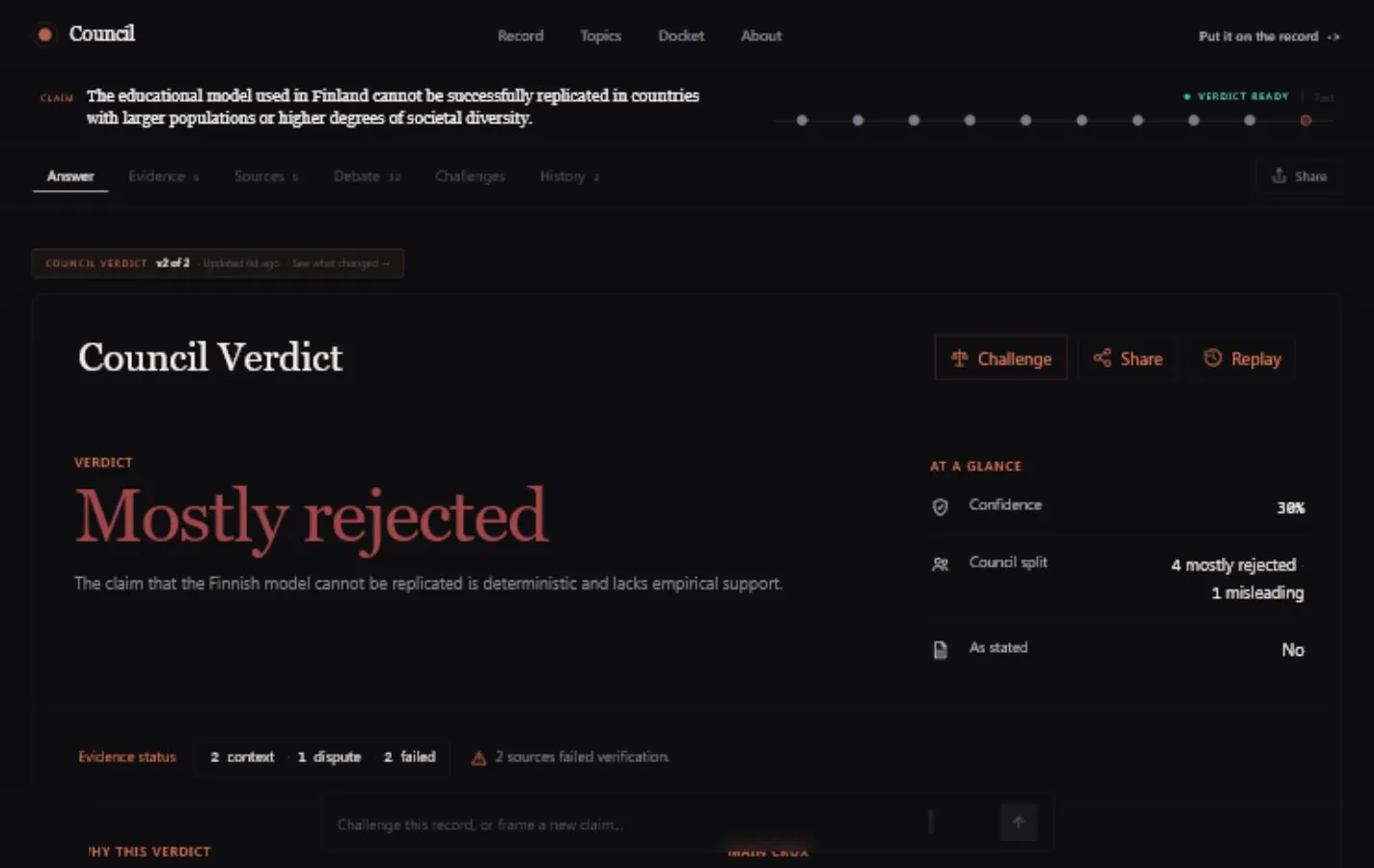
The answer comes first. Below it you can see how confident the council is, how the models split, whether the sources checked out, the strongest point for and against, and the question the disagreement turns on. The record also lists its limitations, any challenges, and the details of the run.
Why I built it
I'm interested in AI tools that produce something people can argue with. An answer in a chat window scrolls away. A Council record stays public with its sources, versions, and challenges, and it says what evidence would change the verdict.
I wanted the verdict to be clear without claiming more certainty than the evidence supports. When the models disagree, Council doesn't force them to agree. The dissent stays in the record next to the evidence, and the verdict can be updated later.
What works so far
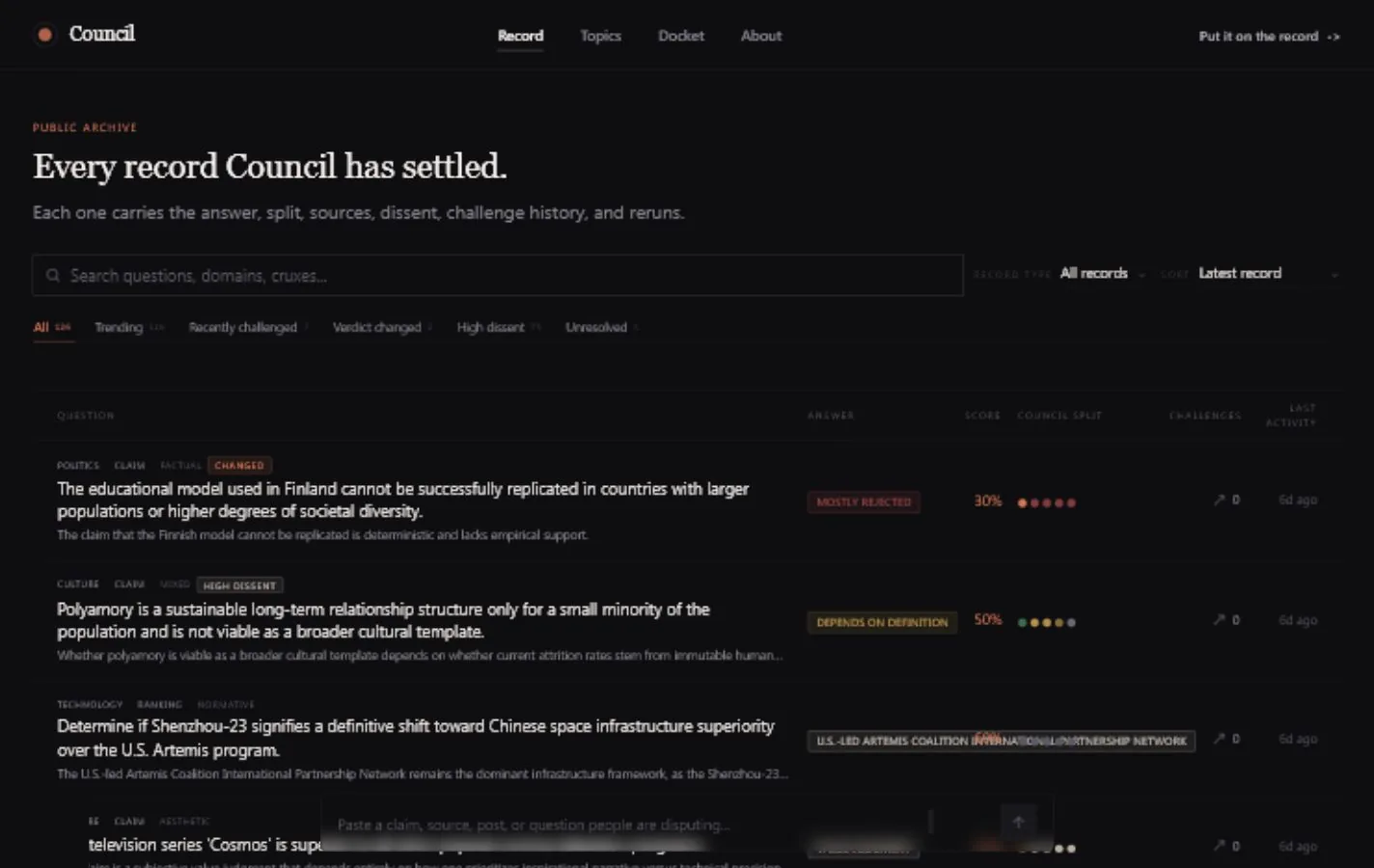
Council Protocol v1.5 runs locally from start to finish. You can submit and confirm a question, watch the models work on it live or replay it later, read the finished record, browse the archive, challenge a record, rerun it, and see its version history and evidence. Records are saved in SQLite. Vitest and Playwright test the main flows, and fallbacks keep the app usable for local development without API keys.
The Floor view shows a record while it is being made: each model's role, what it said, notes from an observer, the source checks, and a draft of the record filling in, up to the final verdict. It shows enough of the process that the answer doesn't come out of a black box, and it still ends in a record a person can read.