How I Use Codex
I use named skills to move ideas from first signal to finished work, and to turn unexpected production failures into tested operating knowledge.
One real run
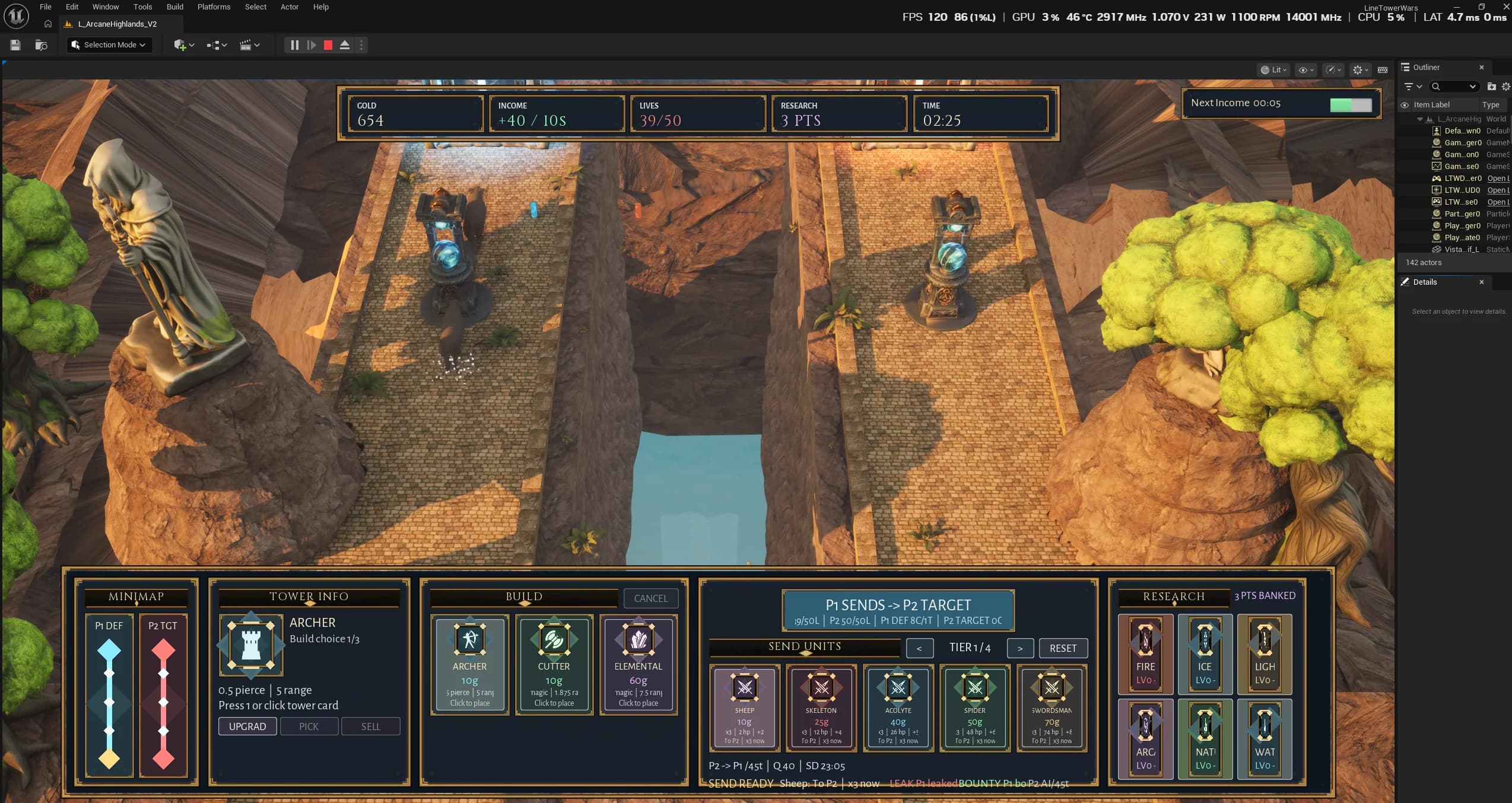
Question: How do I turn a browser tower-defense prototype into a native Unreal Engine vertical slice?
Skills: Think Deeper, Make It Real, and Visual Art Direction.
Result: A playable Unreal Engine 5.8 production slice with a two-lane battlefield, a readable RTS interface, and proof captured from the engine itself.
The working loop
I do not run every skill every time. This is the usual sequence when an idea needs to survive contact with reality.
Hatch
Generate a small number of timely, buildable ideas that feel obvious only after someone says them.
Think Deeper
Rebuild a plausible first answer from fundamentals, assumptions, constraints, and mechanisms.
Make It Weirder
Push a coherent idea away from the obvious middle without making it random or gimmicky.
Grill Me
Give an honest verdict, find decisive weaknesses, and say what would materially strengthen the work.
Make It Real
Replace atmospheric language with a spec, prototype path, test, draft, or other usable artifact.
Remove AI Slop
Remove generated-by-default residue while preserving truth, voice, useful complexity, and deliberate character.
Production modes
These are the skills I use when the direction is clear and Codex needs to take responsibility for making the thing.
Set the visual thesis
Visual Art Direction
Turn a vague aesthetic brief into an authored visual direction with a governing idea, system, and production path.
Direct visual production
Imagegen Production Director
Run serious multi-image production with reference roles, continuity anchors, controlled variation, selection, and delivery receipts.
Protect image edits
Recursive Grain Fixer
Prevent recursive grain and reconstruction drift by limiting edit depth, preserving clean ancestors, and resetting contaminated branches.
Build with taste
Design Polish
Build or refine interfaces with restrained hierarchy, useful density, coherent typography, and visible product character.
Prove the interface
Frontend Acceptance Harness
Exercise the real painted journey across interaction, responsive, accessibility, console, network, and persistence boundaries.
Recursive grain in GPT Image 2
I had been seeing a specific failure in repeated edits with OpenAI's GPT Image 2. A clean image could survive one edit, then gradually acquire grain, cloudy mottling, waxy surfaces, and eventually a patterned relief. It was most obvious after a long production session, which made it easy to dismiss as taste or chance. Instead, I brought the observation to Codex and turned it into a small research program.
Preserve the anomaly
We kept the before-and-after images and separated the visible symptom from a theory about its cause.
Freeze the experiment
Each edit used the same exact no-op instruction, referenced only its immediate parent, and allowed no retries or alternate picks.
Measure the clean regions
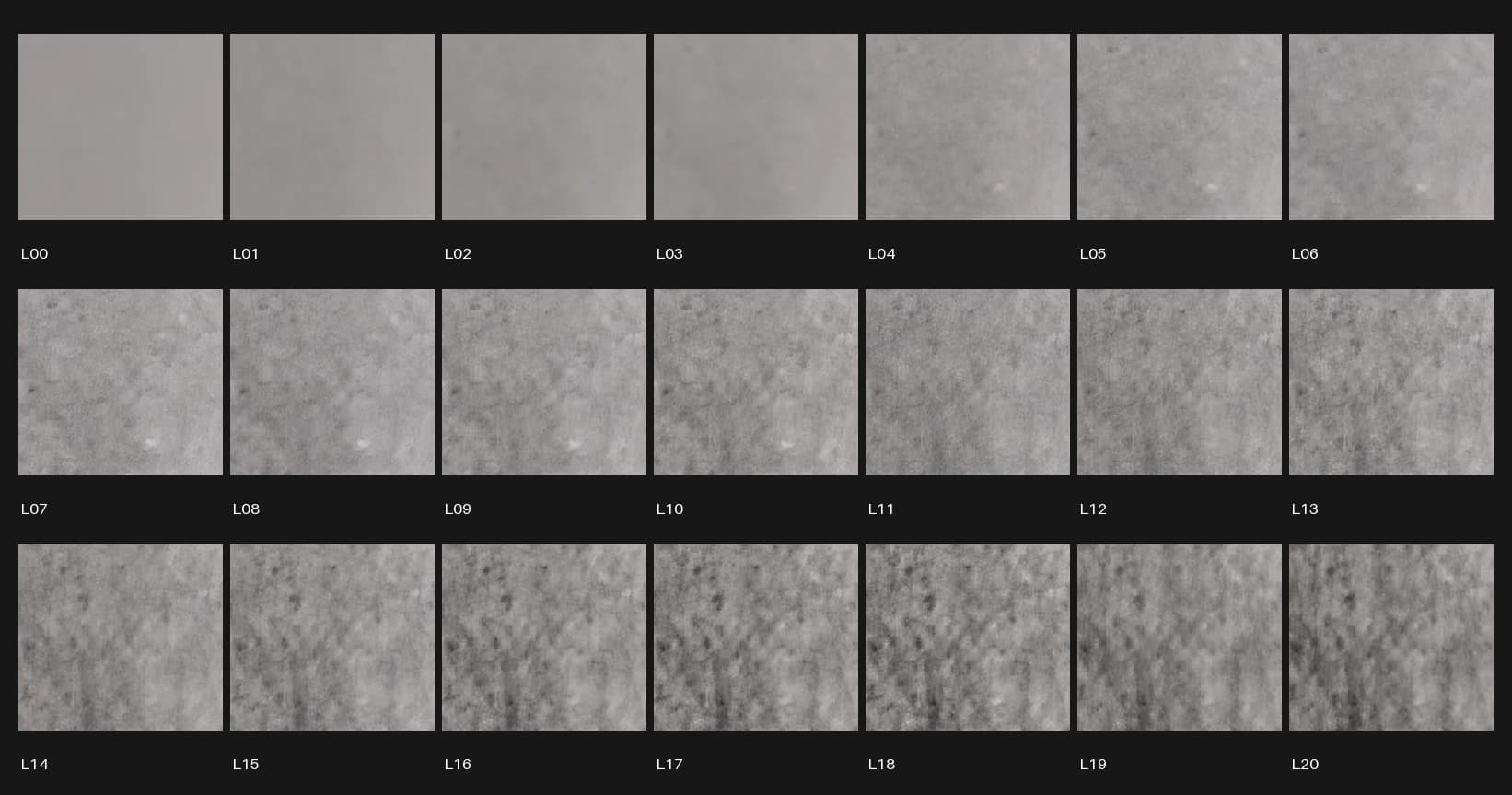
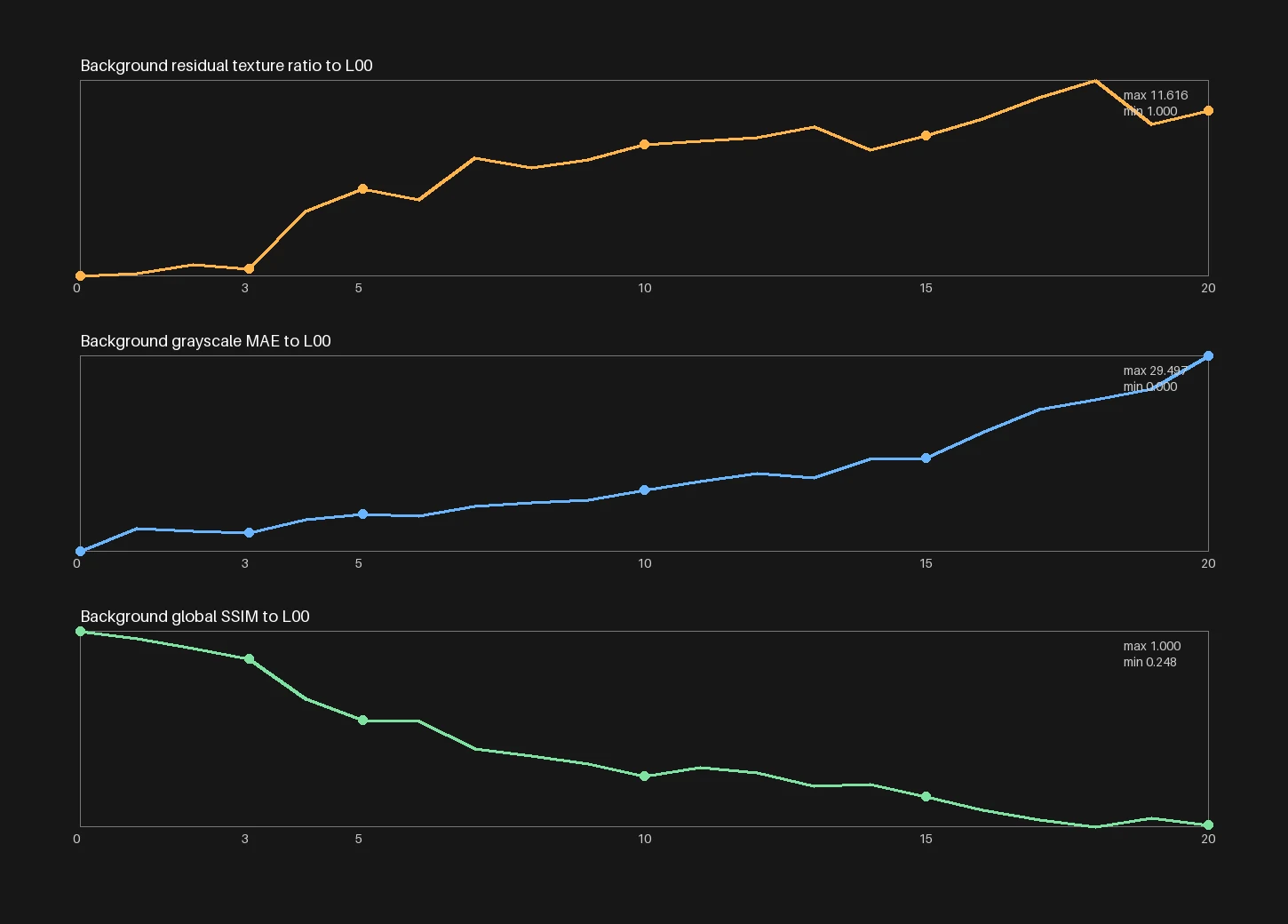
Fixed smooth-background crops were chosen before the edit chains. We tracked residual texture, grayscale difference, and image similarity, then checked the full images at native resolution.
Convert the finding into procedure
The result became a lineage rule for future image work, not just a note saying that the model sometimes looks grainy.
Test 1: scene generality and prompt ablation. A 12-call run compared a photographic portrait, a flat graphic, and first-pass edits with and without an explicit clean-surface prompt. The portrait reached 1.96x its original background residual after three no-op edits. The graphic drifted mainly in gradient, scale, color, and layout. The anti-grain wording showed no measurable advantage in the small two-candidate-per-arm comparison.
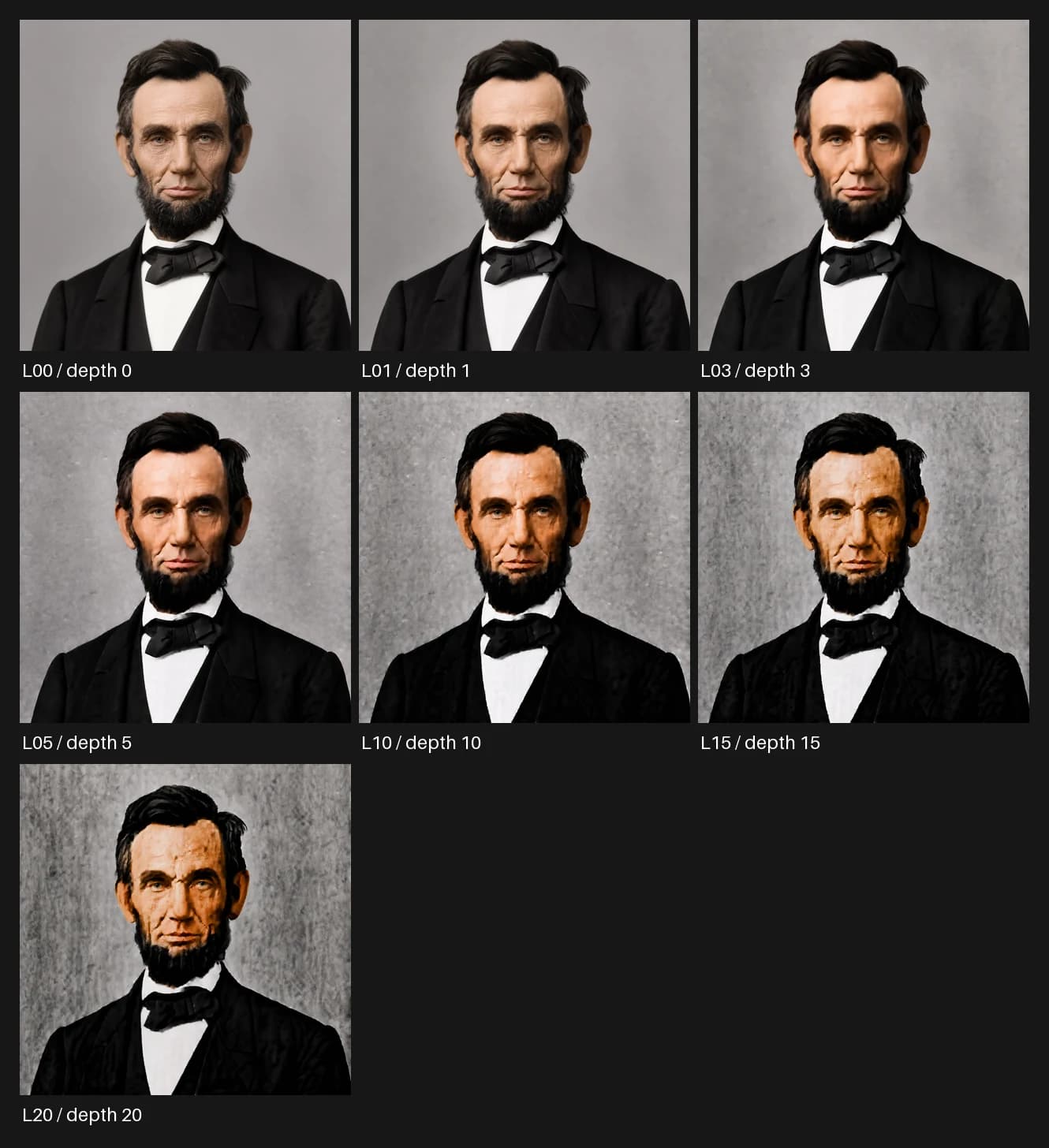
Test 2: anonymous portrait, depth 20. One fresh portrait was passed through twenty exact no-op edits. Background residual texture reached 9.96x the baseline, background similarity fell from 1.000 to 0.173, and depth correlated with residual texture at r = 0.982.
Test 3: famous subject, depth 20. We repeated the chain with Abraham Lincoln to test a strong, familiar identity. The run produced 21 sequential 1254 by 1254 images with zero retries or alternatives. A separate Batman baseline attempt was rejected by output moderation, produced no asset, and was not retried.
Controls and limits. Every generation and edit in these tests used GPT Image 2 (gpt-image-2), and every recursive edit used only the immediately preceding image. Prompts and crop locations were frozen before the relevant comparisons. The exact private backend snapshot and random seeds were not exposed, so the result describes this tested GPT Image 2 workflow rather than every image model or runtime.
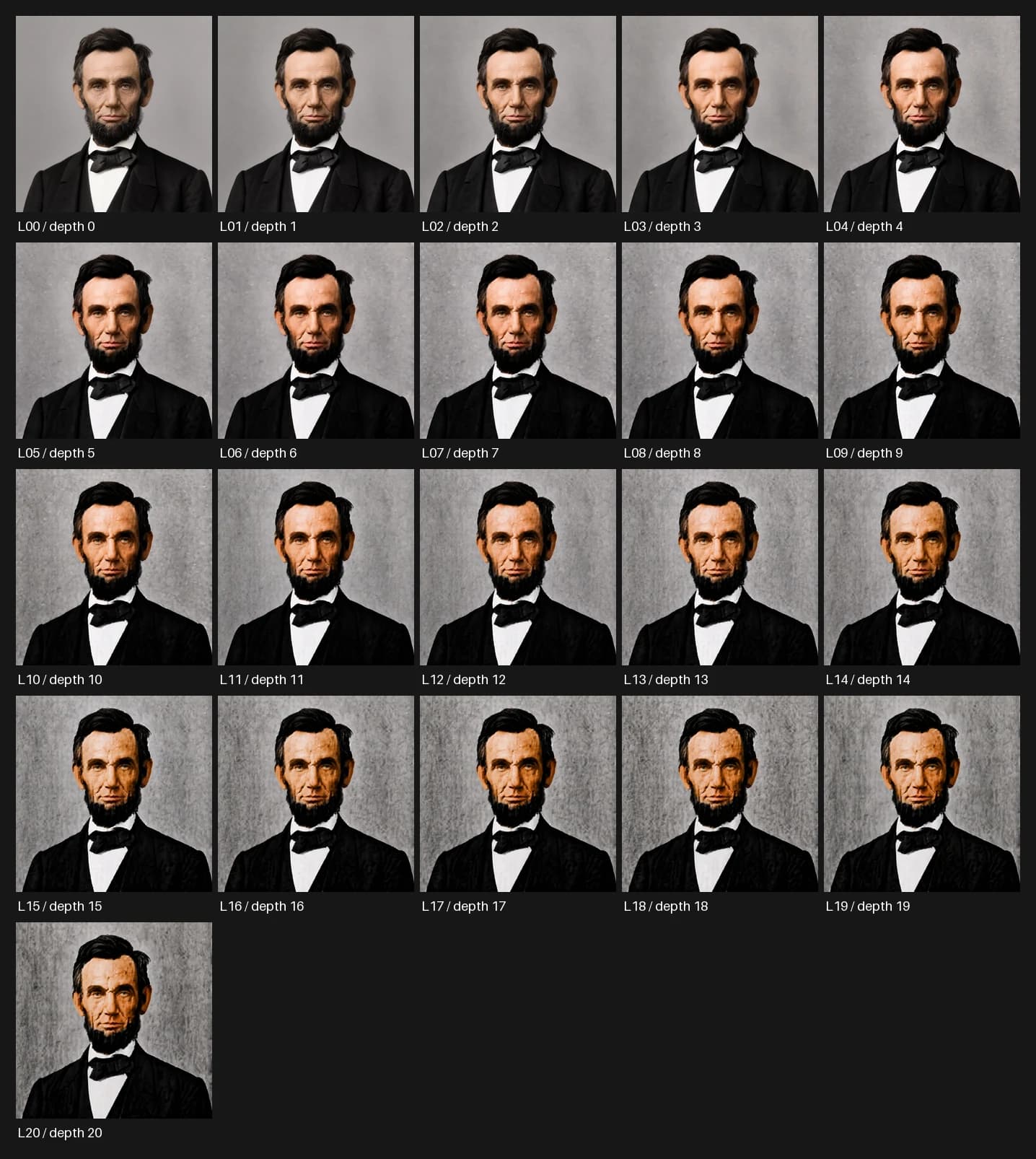
| Edit depth | Background residual | Similarity to L00 |
|---|---|---|
| 0 | 1.00x | 1.000 |
| 1 | 1.13x | 0.973 |
| 4 | 4.55x | 0.739 |
| 5 | 5.73x | 0.659 |
| 10 | 8.14x | 0.442 |
| 18 | 11.62x | 0.248 |
| 20 | 9.99x | 0.255 |
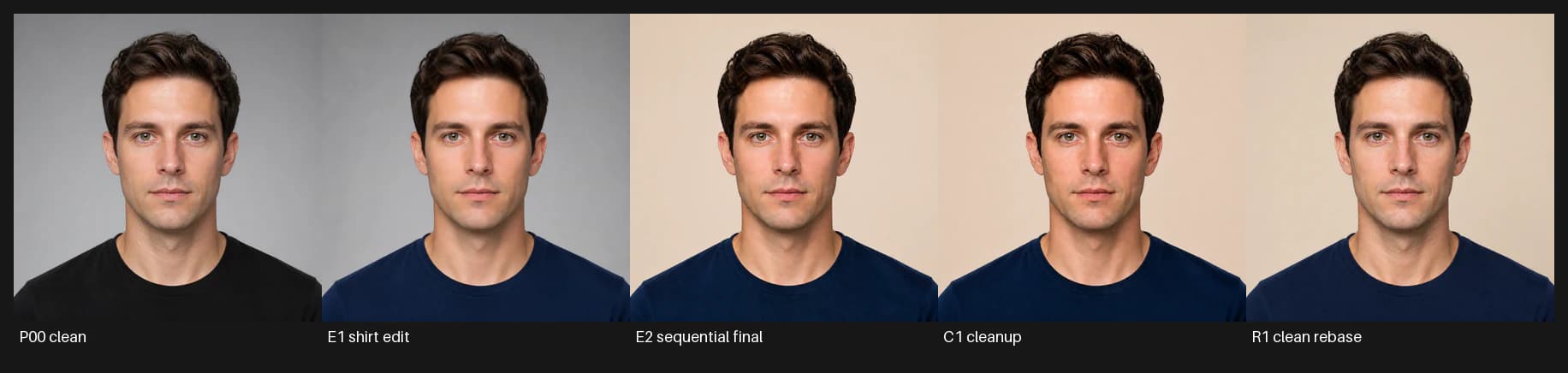
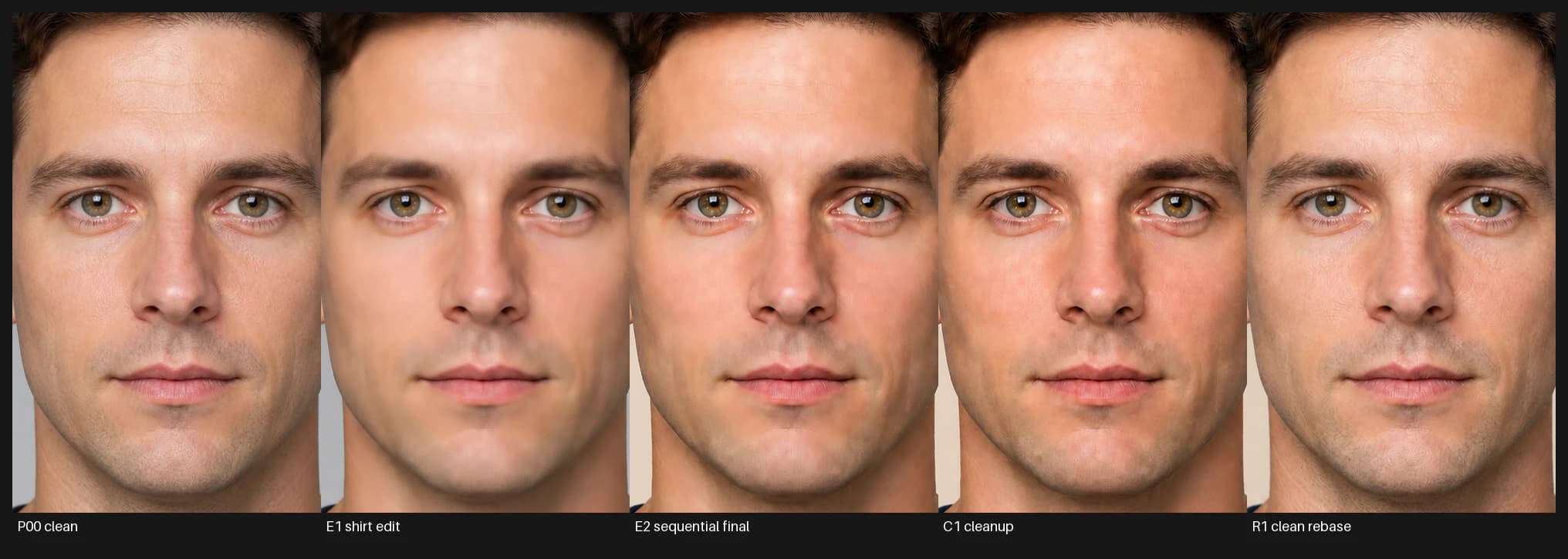
Test 4: clean-ancestor rebase versus contaminated cleanup. A more realistic portrait test made two requested changes: turn a black shirt deep navy, then change a gray background to warm beige. We produced the same final state in two ways. C1 tried to clean the latest sequential image at edit depth 3. R1 applied both cumulative changes once from the untouched P00 portrait at edit depth 1.
The rebase won every preservation measure. Against P00, face similarity was 0.9834 for R1 versus 0.9670 for C1, while face error fell from 7.777 to 5.996. Hair similarity improved from 0.8966 to 0.9245 and hair error fell from 22.774 to 17.601. Relative texture growth was 5.1% lower on the face, 13.1% lower in the hair, and 14.0% lower on the shirt.
This is a practical advantage, not a perfect repair. The clean rebase still showed visible maze-like texture on the forehead, cheeks, neck, and hair, so it failed the native-resolution grain gate. Rebasing is decisively safer than cleaning a contaminated branch, but it does not make a reconstructive image editor pixel-preserving.
The production rule
Prompting for no grain can help define a clean target, but it is not a technical bypass. Lineage depth matters more.
Keep an immutable clean ancestor
Never make the deepest edited file the only surviving source.
Default to one edit
Permit a second recursive edit only after native-resolution review of smooth backgrounds, skin, hair, fabric, edges, and identity.
Branch from clean
Consolidate later changes into one edit from the accepted ancestor instead of continuing the contaminated branch.
Reset when continuity is flexible
Generate fresh without an image reference and restate the complete target. This gives up exact instance continuity but clears the accumulated reconstruction history.
Stop at the first unexplained texture
Mottling, plaster, structured loops, waxy skin, flattened material, or identity drift are branch-stopping evidence, not defects to fix through more recursive edits.
The complete procedure is also available as a reusable Codex skill: download the Recursive Grain Fixer SKILL.md. It is included in the readable and copyable skill files below.
The skill files
Each skill is a plain Markdown file. Open one to read the instructions, copy it, or download it.
HatchFind the idea
Generate a small number of timely, buildable ideas that feel obvious only after someone says them.
---
name: hatch
description: Find strong ideas for what to build next. Use when the user asks for a new idea, asks what they should make or work on next, or wants untapped applications of current AI capabilities. Default to 1 to 3 tight pitches. Treat pitching, saving, specifying, building, and publishing as separate authority gates.
---

# Hatch

Find ideas that feel inevitable in hindsight: specific applications of current technology that should exist, but mostly do not yet.

## Workflow

1. Understand the user's abilities, taste, current work, constraints, and available tools.
2. Look for a specific observable behavior, frustration, or capability gap. Do not begin from a trend category.
3. When a technical capability is load-bearing, verify that it exists now.
4. Generate 1 to 3 ideas. For each, give:
   - a memorable working name;
   - the core insight;
   - why it is possible now;
   - what a focused weekend version looks like.
5. Compare against the user's existing work and obvious crowded territory. Remove recycled ideas and thin wrappers.
6. Commit to the strongest direction and explain why it clears the bar.

## The Bar

- The enabling technology is the mechanic, not a decorative feature.
- The idea comes from a concrete gap, not a vague market trend.
- One capable person can build a meaningful first version.
- The first version creates evidence instead of simulating a full company.
- The pitch is restrained, specific, and free of press-release language.

## Authority Gates

A request for ideas authorizes a pitch, not file creation or implementation. Save, specify, build, commit, deploy, pay for services, or publish only when the user asks for that stage.

## Guardrails

Do not produce a giant list. Do not pitch generic verticals with AI attached. Do not mistake novelty for usefulness. If no idea clears the bar, say what is missing instead of padding the answer.
Think DeeperChallenge the frame
Rebuild a plausible first answer from fundamentals, assumptions, constraints, and mechanisms.
---
name: think-deeper
description: Perform an explicit first-principles depth pass on the current task, idea, product, codebase, creative direction, argument, plan, strategy, prompt, or decision. Use when the user directly asks to think deeper, reason from fundamentals, challenge the frame, or rebuild the answer at a more fundamental level. Do not auto-trigger merely because a task is complex; use a narrower skill when one exists for the actual request.
---

# Think Deeper

Re-examine the problem from fundamentals and return a sharper answer. Depth means better mechanisms, assumptions, tradeoffs, and next actions, not more words.

## Workflow

1. **Name the actual goal:** distinguish the desired outcome from the current solution shape.
2. **Reduce to fundamentals:** identify the forces, constraints, incentives, data, actors, and mechanisms that must be true.
3. **Expose load-bearing assumptions:** separate likely true, uncertain, probably false, and testable.
4. **Challenge the frame:** test problem, category, scale, audience, medium, timeline, and false constraints.
5. **Rebuild the formulation:** produce the simpler, more precise thesis, architecture, concept, plan, or decision frame.
6. **State what changes now:** cut, test, build, research, rewrite, or decide.

## First-Principles Prompts

Use only what clarifies the task:

- What outcome must exist at the end?
- What must be true for it to happen?
- Which constraints are real and which are inherited assumptions?
- What is the bottleneck: concept, execution, distribution, coordination, evidence, or taste?
- What is the simplest system that satisfies the goal?
- What complexity buys leverage and what merely creates work?
- What would change with half the resources or twice the quality bar?
- What next action would create real evidence?

## Output

Prefer:

- Deeper read
- First principles
- Hidden assumptions
- Frame correction
- Stronger formulation
- What changes now

For smaller asks, compress this to deeper read, strongest assumption, stronger version, and next move.

## Domain Calibration

- **Technical:** actual job, data and control flow, failure modes, complexity budget, testable slice.
- **Product:** first user, urgent need, substitute, wedge, distribution, retention, smallest proof.
- **Creative:** emotional center, point of view, world logic, audience reason to care, decorative versus consequential detail.
- **Argument:** thesis, definitions, mechanism, weakest link, strongest counterargument, conclusion that really follows.
- **Decision:** value being optimized, reversibility, unavoidable tradeoff, missing evidence, low-regret experiment.

## Guardrails

Do not perform profundity, add frameworks that do not change the answer, or turn a simple problem into a meditation. If the original approach is already right, say so and sharpen it. If the deeper answer is shorter, write the shorter answer.
Make It WeirderEscape the generic
Push a coherent idea away from the obvious middle without making it random or gimmicky.
---
name: make-it-weirder
description: Make an idea, prompt, brand, product, game, world, story, design direction, campaign, or creative concept more original, surprising, distinctive, less generic, or less safe while preserving coherence and usefulness. Use when the user asks to make something weirder, stranger, more memorable, less obvious, or less like generic AI output.
---

# Make It Weirder

Move the work away from the obvious middle without losing the thing that makes it work.

Weirdness is useful when it increases specificity, tension, memorability, or emotional charge. It is not useful when it becomes noise.

## Workflow

1. Identify the generic center of the current idea.
2. Name what must stay intact: audience, use case, tone, mechanic, promise, or emotional core.
3. Choose 3 to 6 pressure vectors:
   - unusual constraint;
   - sharper contradiction;
   - ritual, taboo, or social rule;
   - strange material detail;
   - changed scale or time horizon;
   - unexpected medium or interface;
   - more specific character or setting;
   - inversion of the default premise;
   - collision between worlds that normally do not touch.
4. Produce versions at different intensity levels.
5. Flag what is too far, what is promising, and what is worth developing.
6. End with a polished version that is distinctive but still usable.

## Output

- Generic center
- Keep intact
- Weirdness directions
- Best version
- Why this is better

## Guardrails

Prefer specific over random, contradiction over quirk, and a strange rule with consequences over decorative detail. Do not make the work edgy for its own sake. If it is already weird enough, make the weirdness more legible or consequential instead.
Grill MePressure-test it
Give an honest verdict, find decisive weaknesses, and say what would materially strengthen the work.
---
name: grill-me
description: Give an honest overall verdict on an idea, project, plan, pitch, product, creative direction, technical approach, essay, strategy, or decision, then identify the strongest parts, decisive weaknesses, and concrete improvements. Use when the user asks to be grilled, pressure-tested, challenged, or given direct non-sycophantic criticism.
---

# Grill Me

Act as a constructive adversary who wants the work to win. Accuracy matters more than harshness.

## Calibrate The Verdict

Choose the closest state:

- **Strong:** worth pursuing; sharpen execution or positioning.
- **Promising but messy:** something real exists, but the concept, audience, structure, or path is confused.
- **Weak:** the premise is derivative, impractical, undifferentiated, or not worth prioritizing.
- **Too early to judge:** decisive information is missing; identify the smallest revealing test.

Do not make a negative verdict perform honesty. If the work is good, say so.

## Pressure-Test

Use only the lenses that can change the recommendation:

- audience and urgent demand;
- differentiation and defensibility;
- emotional or conceptual center;
- execution difficulty and scope;
- distribution and repeat use;
- technical leverage versus complexity theater;
- taste and generic defaults;
- opportunity cost;
- load-bearing assumptions and failure modes.

Ground every criticism in the artifact, evidence, market, workflow, or mechanism. Replace vague feedback with the exact change.

## Output

1. **Honest verdict:** one to three sentences.
2. **What is actually good:** only real strengths and why they matter.
3. **What is weak, confused, or risky:** the few issues most likely to hurt the work.
4. **The uncomfortable question:** one question the current framing may be avoiding.
5. **How to strengthen it:** what to cut, narrow, test, rewrite, build, or prove.
6. **Final call:** pursue, narrow, prototype, pause, kill, merge, or gather evidence.

## Guardrails

Critique the work, not the user's worth or intelligence. Do not invent flaws, use cruelty as theater, pad with a compliment sandwich, or preserve a weak idea out of politeness. A harsher request permits more direct language, not less accurate judgment.
Make It RealCreate the artifact
Replace atmospheric language with a spec, prototype path, test, draft, or other usable artifact.
---
name: make-it-real
description: Turn a vague idea, brainstorm, product concept, strategy, creative direction, feature, workflow, prompt, essay, or plan into something concrete. Use when the work needs to become a spec, user flow, task list, prototype plan, test plan, example, implementation sequence, launch sequence, or first usable version.
---

# Make It Real

Convert a fuzzy idea into something that can be built, tested, assigned, written, or tried. Replace atmospheric language with decisions, artifacts, and next actions.

## Workflow

1. Restate the desired outcome in concrete terms.
2. Choose the artifact the situation needs:
   - product spec;
   - user flow;
   - implementation plan;
   - prototype path;
   - test plan;
   - prompt;
   - outline;
   - ticket;
   - launch sequence;
   - first draft.
3. Define the actors, inputs, outputs, states, constraints, and success criteria.
4. Build the first useful version of the artifact.
5. Identify the smallest next action that would create real evidence.
6. List only the open questions that block execution or meaningfully change direction.

## Concrete Defaults

Prefer named users or actors, visible states, actual examples, acceptance criteria, ordered tasks, testable claims, useful dates or sequence, and explicit non-goals.

## Guardrails

Do not turn uncertainty into process theater. Do not produce a giant plan when a prototype, ticket, or example would be more useful. If the idea is too vague to execute, show the missing load-bearing decisions plainly.
Remove AI SlopMake it belong
Remove generated-by-default residue while preserving truth, voice, useful complexity, and deliberate character.
---
name: remove-ai-slop
description: Remove generic AI residue, awkward generated patterns, default aesthetics, unnecessary complexity, and unearned polish from writing, interfaces, visual creative, prompts, code, and technical systems. Use when the user asks to de-slop, de-AI, humanize, simplify, remove AI tells or cliches, reduce generated clutter, or preserve the idea while making the execution more specific and intentional. Do not claim to detect AI authorship.
---

# Remove AI Slop

Remove choices that feel generated by default rather than chosen for this particular work. The result should feel more specific and intentional, not merely shorter, rougher, or less polished.

## Establish The Contract

Identify:

- what the artifact is trying to accomplish;
- who will use or experience it;
- its intended voice and level of formality or density;
- facts, behavior, constraints, disclosures, and distinctive choices that must survive;
- whether the user wants an audit, a revision, or an implemented change.

If the source is already strong, make few or no changes.

## Shared Slop Signals

Treat these as evidence to investigate, not proof of AI authorship:

- language or styling that could move unchanged to many unrelated artifacts;
- unnecessary structure, containers, qualifiers, features, or abstraction;
- simulated sophistication, personality, empathy, or cinematic prestige;
- symmetry or comprehensiveness that feels templated rather than useful;
- default metaphors, icons, gradients, layouts, naming, or architecture with no local reason;
- polish that flattens voice, texture, asymmetry, product character, or domain specificity.

## Workflow

1. Mark the specific choices that weaken the artifact.
2. Separate necessary complexity from generated-looking residue.
3. Delete what carries no meaning, behavior, evidence, or character.
4. Clarify, merge, demote, or replace what has a real job but a generic execution.
5. Strengthen concrete nouns, direct actions, local conventions, hierarchy, and context-specific detail.
6. Preserve deliberate oddness, useful density, and authored texture when they serve the work.
7. Recheck the whole artifact so local fixes do not create a new generic style.

Prefer the smallest coherent pass. Do not expand scope into a general rewrite, redesign, or refactor unless the user asks.

## Preserve Truth And Trust

Do not change facts, claims, identifiers, APIs, contracts, disclosures, accessibility, or system behavior casually. Do not invent experience, evidence, capability, or emotional texture. Do not conceal automation in a misleading way. Surface substantive changes separately instead of smuggling them into cleanup.

## Verify In The Native Medium

Read prose as a whole. Render and operate interfaces. Inspect visual creative at delivery size. Run focused checks for code. Passing code checks are not visual proof.

## Final Test

- Could this choice appear unchanged in a thousand unrelated generated artifacts?
- Does it have a present-tense job here?
- Is the result more specific to this author, product, audience, and situation?
- Did the pass preserve truth, capability, voice, and useful character?

If a choice is generic and expendable, remove it. If it has a real job, make it belong.
Rare FindingsWatch across the loop
Test consequential work for the rare discovery or proposal that would genuinely change the decision.
---
name: surface-rare-findings
description: Test consequential research, audits, strategy, architecture, product or creative reviews, investigations, and implementation for genuinely rare, decision-changing discoveries or unusually high-leverage proposals. Use when the user asks for a rare finding, gold drop, hidden breakthrough, surprising opportunity, or deep anomaly check, and when important evidence exposes an overlooked contradiction, constraint, pattern, or opportunity that could materially alter the outcome. Do not use for routine tasks or to manufacture novelty.
---

# Surface Rare Findings

Run a quiet, high-precision search for discoveries or proposals that could materially change the work. Preserve the primary task. Treat no result as normal.

## Core Contract

- Use rarity as an evidence standard, not a writing style.
- Set no quota. Most tasks should produce no rare finding.
- Distinguish `RARE FINDING` from `RARE PROPOSAL`.
- Keep routine observations, known best practices, and merely severe issues in the normal report.
- Never distort, delay, or broaden the requested work just to search for rarity.

## Evaluate Candidates

First identify the current decision, expected baseline, and evidence available. Look for candidates in:

- contradictions between sources, behavior, and stated assumptions;
- independent signals that converge unexpectedly;
- an overlooked constraint or capability that changes what is possible;
- a second-order implication with disproportionate leverage;
- an anomaly that survives ordinary explanations;
- a simpler framing that invalidates a major part of the current approach.

Test each candidate against every gate:

1. **Surprise:** It meaningfully violates a reasonable baseline, not just the user's awareness.
2. **Materiality:** It would change a decision, strategy, architecture, risk posture, cost, creative direction, or next move.
3. **Evidence:** A finding has direct primary proof or multiple genuinely independent signals. Repeated claims derived from one upstream source count once.
4. **Disconfirmation:** Actively test the strongest ordinary explanation, conflicting evidence, and likely measurement or interpretation error.
5. **Actionability:** State what should change because of it without exceeding the user's authorization.

Reject the rare label if any gate fails.

## Classify Precisely

Use `RARE FINDING` only for a factual discovery that passes every gate.

Use `RARE PROPOSAL` for an unusually high-leverage idea grounded in the evidence but not yet proven. Label the key assumption and the cheapest decisive test.

Use `RARE CANDIDATE` only when the potential consequence is large but decisive evidence is missing. Report it only when the user explicitly requested a rare-finding check or when the missing validation must affect the current decision.

Do not convert speculation into a finding. Do not convert importance, severity, novelty, or confidence alone into rarity.

## Report Sparingly

When the skill triggers implicitly and nothing passes, say nothing about the check.

When the user explicitly requests the check and nothing passes, report one line:

`Rare finding check: none met the threshold.`

When something passes, report at most the strongest one unless multiple findings are independently decisive:

### RARE FINDING

- **Finding:** State the discovery in one precise sentence.
- **Why it is rare:** Name the reasonable baseline it overturns.
- **Evidence:** Give direct, inspectable support and distinguish verified facts from inference.
- **Disconfirmation attempted:** State the strongest alternative checked and its result.
- **Consequence:** Explain the decision or outcome this changes.
- **Recommended move:** Give the highest-value next action within scope.
- **Confidence:** High or medium, with the limiting uncertainty.

For a proposal, replace **Finding** with **Proposal** and add:

- **Key assumption:** State what remains unproven.
- **Decisive test:** Give the cheapest credible way to validate it.

Keep the language calm and concrete. The evidence and consequence create the gold-drop effect; typography and hype do not.

## Preserve Execution

If a rare result appears during authorized implementation, incorporate it immediately when the adjustment is low-risk, reversible, and within scope. Pause for the user only when it materially changes product direction or taste, creates external or irreversible consequences, requires new authorization, or makes continued implementation wasteful.
Visual Art DirectionSet the visual thesis
Turn a vague aesthetic brief into an authored visual direction with a governing idea, system, and production path.
---
name: visual-art-direction
description: Invent imaginative, original, medium-aware visual concepts and art direction before production. Use when the user asks Codex to originate or compare visual directions for interfaces, brands, campaigns, posters, editorial layouts, key art, identities, packaging, scenes, or motion.
---

# Visual Art Direction

Connect what the work must communicate or make someone feel to a coherent visual system. Do not confuse creativity with decoration, random novelty, or fashionable styling.

## Establish The Creative Contract

Identify the audience, medium, viewing context, primary message or emotional effect, fixed content, inherited brand rules, accessibility needs, and production constraints. Infer reversible gaps. Ask only when a missing answer materially changes taste, identity, cost, or direction.

## Find The Governing Idea

State:

1. What the viewer should understand or feel.
2. What receives attention first and what recedes.
3. The formal behavior that makes the meaning perceptible.
4. The productive tension that gives the work character.

Express the visual thesis in one concrete sentence. If it could describe hundreds of unrelated projects, sharpen it.

## Develop Directions

When exploration is needed, develop three structurally different directions:

- one compelling interpretation of the brief's center;
- one unexpected metaphor or reframing;
- one formally adventurous, higher-risk direction that remains coherent.

For each, define composition, hierarchy, type-image relationship, palette or material behavior, signature move, main risk, and smallest proof worth making.

## Judge And Route

Recommend one direction against clarity, emotional specificity, surprise, usefulness, accessibility, production feasibility, and resistance to generic AI aesthetics. Then route execution to the relevant interface, image, motion, campaign, or review skill.

## Guardrails

Do not present palette swaps as separate concepts. Do not average references into moodboard soup. Do not invent product claims or brand facts to make a concept look complete. Preserve the creative leap during production instead of sanding it down into category convention.
Imagegen Production DirectorDirect visual production
Run serious multi-image production with reference roles, continuity anchors, controlled variation, selection, and delivery receipts.
---
name: imagegen-production-director
description: Direct serious multi-image production with Codex's built-in image generation, including identity and composition anchors, brief and reference planning, controlled revision, lineage, contact sheets, manifests, and project packaging.
---

# Imagegen Production Director

Direct the production loop around image generation. Treat strong outputs as selected production assets with lineage and acceptance criteria, not lucky prompt results.

## Establish The Production Contract

Confirm or infer the deliverable types, count, aspect ratios, destinations, creative brief, exact text or brand elements, continuity requirements, hard gates, project location, and required receipts. Proceed on reversible defaults; ask before changing direction materially or spending a large generation allowance.

## Assign Reference Roles

Inspect decisive references and give each one a job: edit target, identity authority, product authority, wardrobe or environment reference, composition reference, lighting reference, style reference, or approved continuity anchor. State what must remain fixed and what may change.

## Build Anchors Before Derivatives

When a character, product, environment, composition, or graphic language must recur, create and approve a canonical anchor first. Record its fixed traits and use it on every derivative. Do not let each newest output quietly become the new identity authority.

## Plan And Generate

Create a compact asset matrix with stable IDs, intended use, framing, prompt concept, reference roles, invariants, deliberate variation, and acceptance criteria. Keep early waves small. Vary one meaningful axis at a time and generate important aspect ratios natively.

## Select, Repair, And Package

Review outputs together for drift as well as individually for craft. Prefer bounded edits when the structure is sound; regenerate when identity, anatomy, product geometry, or composition is fundamentally wrong. Package approved assets with clear filenames, prompts, references, lineage, and an honest manifest of accepted and rejected work.

## Guardrails

Do not call a green-background image transparent. Do not apply generated logos or exact copy when deterministic typesetting is required. Do not scale a run from an unapproved anchor. Do not report tool success as visual acceptance.
Recursive Grain FixerProtect image edits
Prevent recursive grain and reconstruction drift by limiting edit depth, preserving clean ancestors, and resetting contaminated branches.
---
name: recursive-grain-fixer
description: Prevent, detect, and route around recursive grain and broader reconstruction drift in repeated generative image edits.
---

# Recursive Grain Fixer

Repeated generative edits are reconstructions, not lossless pixel operations. A clean image can accumulate grain, cloudy mottling, plaster-like texture, waxy skin, unstable gradients, material drift, color drift, geometry drift, and identity-instance drift.

## Protocol

1. Preserve an immutable fresh or accepted clean ancestor.
2. Record the clean-ancestor ID and edit depth for every derivative.
3. Default to one edit from the clean ancestor.
4. Permit a second sequential edit only after native-resolution inspection of smooth backgrounds, skin, hair, fabric, glass, edges, gradients, color, geometry, and identity.
5. Consolidate later changes into one rebase from the earliest accepted clean ancestor instead of extending the deepest branch.
6. When exact instance continuity is expendable, generate fresh with no image reference and restate the complete target.
7. Stop at the first unexplained grain, mottling, chalkiness, structured loops, waxiness, material reassignment, or identity drift. Do not repair a contaminated branch through more recursive edits.

## Prompting

For intentionally clean surfaces, describe smooth continuous tonal transitions and coherent materials, then exclude grain, speckles, mottling, plaster, paper, dust, scratches, patina, and film texture. Treat this wording as a secondary preference. It cannot make a reconstructive editor pixel-preserving or clean an inherited contaminated raster.

## Acceptance

Inspect the full output and fixed smooth regions at native resolution. Compare them with the clean ancestor. Keep deliberate film grain or material texture when it matches the accepted texture intent; reject only unrequested texture growth or broader reconstruction drift.
Design PolishBuild with taste
Build or refine interfaces with restrained hierarchy, useful density, coherent typography, and visible product character.
---
name: design-polish
description: Build or refine user interfaces with restrained, editorial, quiet-but-not-empty taste. Use for visible frontend work involving hierarchy, spacing, typography, color, interaction, accessibility, or generic AI-looking UI.
---

# Design Polish

Make the interface feel authored, legible, and alive. The target is restraint with intent, not generic minimalism.

## Start With Evidence

Open the real surface, capture the relevant state, identify the primary user task, and name visible problems from evidence. Fix in this order: hierarchy, layout, spacing, typography, color, depth, motion, and detail.

## Working Rules

- Give each screen one obvious center of gravity.
- Use size, weight, position, and spacing before adding color.
- Preserve useful density; empty space should clarify relationships.
- Keep the type system small and purposeful.
- Reserve strong accents for meaningful states or focal actions.
- Use motion to explain state, continuity, focus, or causality.
- Protect project-specific brand decisions and distinctive choices.

## Remove Default AI UI

Remove or justify gradient blobs, generic violet branding, card salad, emoji iconography, glows, glass, low-contrast text, stock component styling, generic hero copy, and sterile emptiness with no hierarchy or point of view.

## Accessibility Floor

Use semantic HTML, labeled inputs, visible focus states, logical keyboard order, sufficient contrast and target sizes, reduced-motion support, and more than color alone to communicate state.

## Verify The Painted Result

Run the actual application. Inspect the primary viewport and responsive targets. Exercise affected hover, focus, disabled, loading, error, empty, and overflow states. Fix visible failures before declaring the interface finished.
Frontend Acceptance HarnessProve the interface
Exercise the real painted journey across interaction, responsive, accessibility, console, network, and persistence boundaries.
---
name: frontend-acceptance-harness
description: Prove that a frontend feature, fix, workflow, redesign, or responsive state works in the actual painted application. Use when source checks, DOM state, or a passing build are insufficient.
---

# Frontend Acceptance Harness

Verify the user's real journey, not merely source code, a passing build, or a changed URL.

## Define The Acceptance Contract

Record the route, starting state, role, viewport, input method, actions, expected painted transitions, persistence behavior, responsive expectations, and accessibility checks. Treat modal behavior, saving, and mobile fit as separate claims.

## Orient To The Runtime

Identify the exact working tree, process, host, port, route, fixture, and verification time. Reuse a healthy intended runtime or start the repository-native one. Run targeted automated gates when practical, but do not treat them as visual acceptance.

## Exercise The Painted Journey

Use the real controls and inspect loading, empty, error, retry, success, disabled, and completed states. Check dialogs, keyboard flow, focus restoration, refresh persistence, back navigation, realistic viewports, clipping, broken media, obscured actions, console errors, failed requests, and stale responses.

## Repair And Replay

When implementation is authorized, reproduce the failure, fix the smallest root cause, rerun code gates, restart or refresh the correct runtime, and replay the same acceptance path. For review-only work, report the failure without editing.

## Produce The Receipt

Report the claim, route or state, viewport, action, observed result, and pass, fail, or blocked status. Distinguish source changed, build passed, runtime live, journey exercised, and visually verified. State every important boundary that was not checked.